Essential Homeowners Insurance Tips for Hurricane-Prone Areas: Protect Your Home with Beach Insurance LLC
Navigating Hurricane Season: Why Proper Homeowners Insurance is Crucial
Living in hurricane-prone areas requires proactive planning, especially when it comes to protecting your most significant investment: your home. As hurricane season approaches, understanding your homeowners insurance coverage is not just a recommendation; it's an essential safeguard. Many homeowners assume their standard policy covers all hurricane-related damage, but that's often not the case. Preparing now with appropriate homeowners insurance tips for hurricane-prone areas can significantly reduce financial stress and expedite recovery should a storm strike.
Essential Homeowners Insurance Tips for Hurricane-Prone Areas
A standard homeowners insurance policy is the foundation of your protection, but it needs to be robust enough to withstand the unique challenges hurricanes present. Here are critical areas to review:
- Adequate Dwelling Coverage: Ensure your policy's dwelling coverage reflects the current cost to rebuild your home, not its market value. Construction costs can fluctuate, especially after widespread disaster, so an annual review of your dwelling limits is vital.
- Personal Property Coverage: Document all your possessions with a home inventory. This will help you determine if your personal property limits are sufficient and will greatly assist in the claims process. Consider replacement cost coverage for your belongings, which pays to replace items with new ones, rather than their depreciated value.
- Other Structures Coverage: Detached garages, sheds, and fences need protection too. Standard policies typically offer coverage for other structures as a percentage of your dwelling coverage. Confirm this amount is adequate for all structures on your property.
Understanding Flood Insurance: Your First Line of Defense
One of the most crucial homeowners insurance tips for hurricane-prone areas is securing a separate flood insurance policy. Standard homeowners insurance policies explicitly exclude damage caused by flooding, including storm surge and heavy rainfall. Whether you live directly on the coast or further inland, flooding can occur anywhere.
Key aspects of flood insurance:
- It covers damage to your home's structure and contents specifically from rising water.
- Policies are available through the National Flood Insurance Program (NFIP) or private carriers.
- Crucially, most flood insurance policies have a 30-day waiting period before coverage takes effect. Do not wait until a storm is imminent to purchase this vital protection. Learn more about flood insurance options with Beach Insurance LLC.
Decoding Hurricane Deductibles and How They Impact Your Wallet
If you reside in a hurricane-prone region, your homeowners insurance policy likely includes a special hurricane or windstorm deductible. Unlike standard deductibles, which are usually a fixed dollar amount, hurricane deductibles are typically a percentage (e.g., 1% to 10%) of your home's insured value. This means a higher out-of-pocket expense.
For example, a home insured for $400,000 with a 5% hurricane deductible would require you to pay the first $20,000 of covered hurricane damage. Understanding when these deductibles are triggered—often by a named storm or a hurricane warning—is critical. Review your policy's declarations page to comprehend your specific hurricane deductible and its conditions. The Insurance Information Institute provides further details on how these deductibles work.
Beyond the Walls: Protecting Personal Property and Other Structures
When a hurricane strikes, damage isn't limited to the main dwelling. Your personal belongings, from furniture to electronics, are also at risk. Most homeowners policies offer personal property coverage, typically 50% to 70% of your dwelling coverage. It's essential to:
- Create a comprehensive home inventory, ideally with photos or videos, stored in a secure, off-site location.
- Understand whether your policy offers "actual cash value" (ACV) or "replacement cost value" (RCV) for personal property. RCV provides enough to buy new items, while ACV accounts for depreciation, paying out less.
- For high-value items like jewelry, art, or collectibles, consider scheduling them separately with a personal property floater or endorsement to ensure adequate coverage beyond standard limits.
Additionally, structures like detached garages, sheds, and fences are covered under "other structures" coverage. Verify that the limits for these structures are sufficient to rebuild or repair them after a storm.
Don't Forget ALE: What Additional Living Expenses Coverage Means for You
If a hurricane renders your home uninhabitable, where will you stay, and who will cover those costs? Additional Living Expenses (ALE) coverage, often included in your homeowners policy, is designed for this exact scenario. ALE pays for the increased costs of living away from your home while it's being repaired or rebuilt after a covered disaster.
This can include:
- Hotel or rental home expenses.
- Restaurant meals that exceed your typical food budget.
- Laundry services and other essential services.
Coverage limits for ALE vary, often set as a percentage of your dwelling coverage. Review your policy to understand your limits and the duration for which expenses are covered. This vital coverage provides a financial safety net during a stressful displacement, ensuring you have a place to stay and essential needs met.
The Value of an Annual Policy Review with Your Insurance Agent
Insurance needs change over time. An annual policy review is one of the most proactive homeowners insurance tips for hurricane-prone areas. Working with a knowledgeable insurance agent like those at Beach Insurance LLC ensures your coverage remains current and adequate. During this review, you can:
- Adjust dwelling coverage to reflect rising construction costs or home improvements.
- Update personal property values, especially after significant purchases.
- Discuss changes in your personal circumstances, such as adding a new pool or renting out a portion of your home, which may require additional endorsements.
- Clarify any questions about deductibles, exclusions, and claims procedures before a hurricane threatens.
Regular communication with your agent helps close potential coverage gaps and ensures you are fully prepared.
Partnering with Beach Insurance LLC: Your Local Experts for Hurricane Protection
Navigating the complexities of homeowners insurance in hurricane-prone regions requires local expertise. Beach Insurance LLC, serving coastal South Carolina and North Carolina communities like Myrtle Beach, Ocean Isle Beach, and Surfside Beach, understands the unique risks homeowners face. As independent insurance brokers, we work with numerous carriers to compare options and tailor comprehensive personal insurance solutions that fit your specific needs and budget. Our goal is to provide peace of mind through expert guidance and personalized service, ensuring your home is protected against the unpredictable nature of hurricane season.
Securing Your Sanctuary: A Comprehensive Approach to Hurricane Preparedness
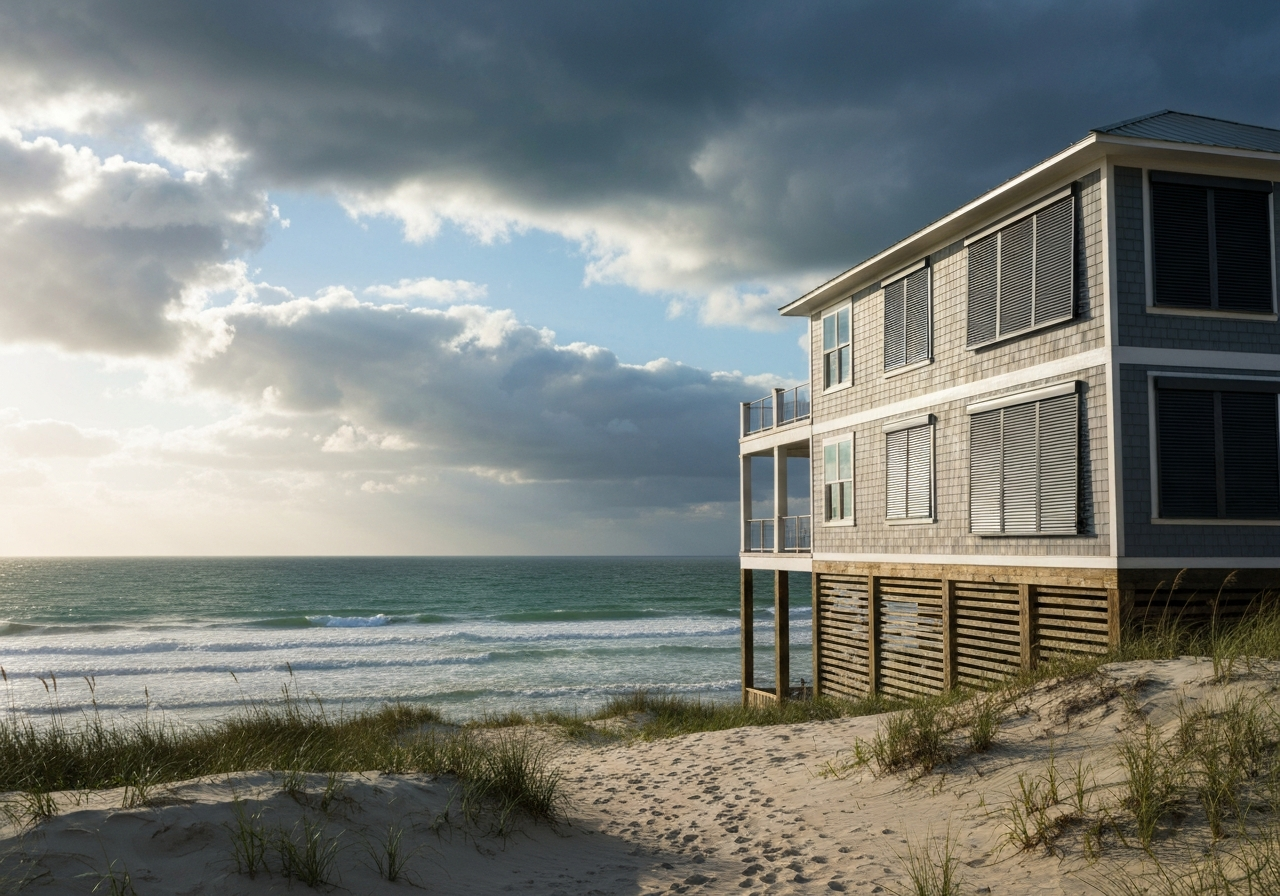
Protecting your home from hurricanes goes beyond just insurance; it involves a comprehensive approach to preparedness. While robust homeowners insurance is crucial, physical preparations are equally important. This includes securing your property with storm shutters, trimming trees, and having an emergency kit ready. However, the financial aspect of recovery hinges significantly on your insurance plan.
By implementing these homeowners insurance tips for hurricane-prone areas—understanding your policy, securing adequate flood insurance, being aware of hurricane deductibles, and conducting regular reviews—you create a strong financial defense. Beach Insurance LLC is committed to helping you understand your options and secure the best coverage for your sanctuary.
Protect your home this hurricane season. Get in touch with Beach Insurance LLC for expert guidance on your homeowners insurance.