solar panel coverage homeowners policy Carolinas
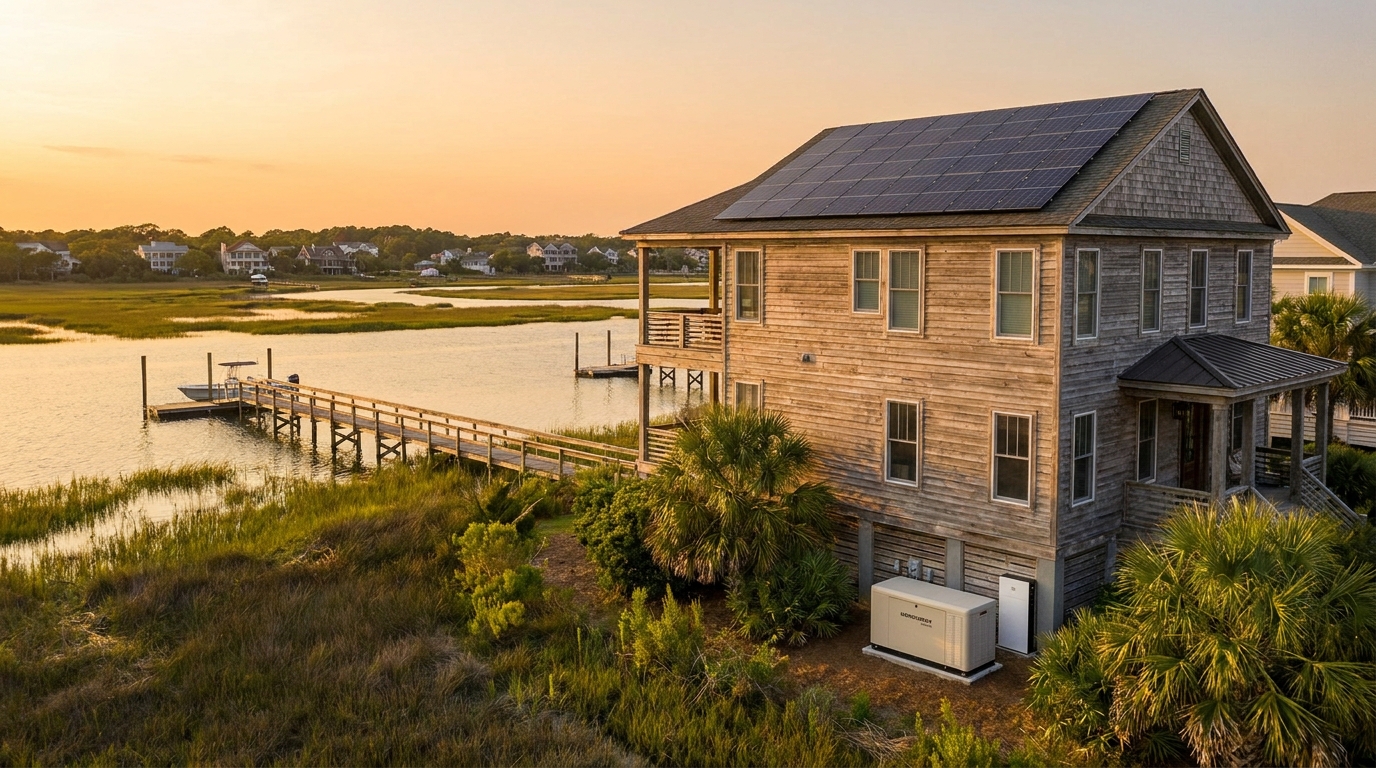
People who look up solar panel coverage homeowners policy Carolinas are trying to place three machines on one contract: an owned rooftop array, a permanently installed standby generator, and a home battery. The U.S. Department of Energy states that most homeowners policies cover rooftop solar panels because the system is attached to the property and is treated as part of it, and that a ground-mounted array or panels on a carport may need an additional or separate policy. [1] North Carolina and South Carolina describe the house and what is attached, structures that stand apart, personal belongings, and extra living costs when a covered loss makes the house unlivable. Neither state page names a generator or a battery. [2][3]
The property parts a Carolina policy already uses
The National Association of Insurance Commissioners, on a topic page updated October 25, 2025, says policies cover the structure of the home, including attached structures, fixtures, and built-in appliances, and that the dwelling grant should be enough to fully rebuild. [4] That page also separates structures that are not attached, such as fences and sheds, from personal belongings such as furniture, electronics, and clothing, and from loss of use, which pays some additional living expenses during repair. [4]
North Carolina's Department of Insurance calls Coverage A the major property coverage for the house and attached structures when a covered loss damages them. The amount is normally the cost to rebuild. Land is left out. Replacement cost is the amount it would take to replace or rebuild the home, or to repair damage, with materials of similar kind and quality, without a deduction for depreciation. The department says to carry at least 80 percent of full replacement cost. Below that line, the insurer may not cover the entire cost to rebuild. [2]
Coverage B protects structures on the residence premises that are not attached. The examples are a detached garage and a tool shed. The limit is normally 10 percent of Coverage A, and more coverage can be purchased. The contract reduces payment on a loss if Coverage B is below 80 percent of the full replacement cost of those structures. [2] Coverage C protects the contents of the home and the personal belongings of the people who live there. When the dwelling is also covered, Coverage C is normally 50 percent of Coverage A, or an amount set with the company. Some property that is easy to lose carries special limits. The examples are cash, securities, jewelry, furs, manuscripts, and stamp or coin collections. A generator and a battery are not on that list. [2] Coverage D helps with additional living expenses if an insured peril damages the home so severely that the residents cannot live there. [2]
South Carolina describes the same shape with less arithmetic. The structure grant should pay to repair or rebuild if fire, hurricane, hail, lightning, or a disaster the policy lists damages or destroys the home. The guideline is to buy enough coverage to rebuild. A garage, a tool shed, or a gazebo is covered in some policies, so the contract has to be read. A standard policy will not pay for a flood, an earthquake, or routine wear and tear. Personal belongings coverage is generally 50 to 70 percent of the insurance on the structure. [3] A companion page says the face amount is the most paid if the house is a total loss, and that additional living expenses apply, up to the stated limit, when the house cannot be occupied because of a covered loss. [5]
A 2023 NAIC shopping tool calls the special form, often labeled HO-3, the most common type. The house is covered against all perils except listed exclusions. Personal property is covered only for named perils. This form, the tool says, covers the house for replacement cost and personal property for actual cash value, and each company may define the terms differently. [6] The declarations page, not a statewide assumption, names the form on a house in Charlotte, Charleston, or the Grand Strand.
The personal policy we place is described on our homeowners insurance page.
Dwelling coverage while the work is still in pieces
During installation, panels, conduit, a generator cabinet, and a battery are supplies on the lot. The North Carolina consumer guide, revised in October 2010, says Coverage A protects the house and attached structures if certain events damage them. It also covers fixtures such as plumbing, heating, and permanently installed air-conditioning systems, electrical wiring, and supplies on or adjacent to the residence premises used to construct, alter, or repair the dwelling or structures on the premises. [7] If the current form words the grant differently, the form controls. The 2010 guide does not discuss a contractor's separate installation policy.
The 2022 NAIC consumer guide lists the same kind of fixtures, without the supplies sentence: plumbing, electrical wiring, heating, and permanently installed air-conditioning. [8] Neither guide names a photovoltaic module, a standby generator, or a storage battery. North Carolina's basic page also does not name solar in the 80 percent sentence. If an owned attached system is part of the property, as the Department of Energy describes rooftop panels, the 80 percent test uses the new full replacement cost. [1][2]
Ordinance or law coverage is a different grant. The 2023 tool defines it as paying the extra cost to rebuild to codes that did not exist when the home was first built, and lists it with optional items to quote. [6] It is not the supplies sentence, and it is not a voluntary upgrade.
Loss of use is easy to misread on a job site. Coverage D in North Carolina, and the South Carolina additional-living-expense description, respond when a covered loss makes the house unlivable. [2][5] Crews on the roof, or a day without utility power while a transfer switch is tied in, are outside that grant unless a covered cause of loss is what made the house unlivable.
An owned rooftop array after it is fastened down
Test the Department of Energy line from the opening against the declarations page, including the caution to check with the insurance provider when panels sit on the ground or on a carport. [1]
The department's Weatherization Assistance Program solar FAQ, dated August 2022, speaks to households in that program, not to every house in the Carolinas. It says yes, the system is covered by homeowners insurance, a rider may be required for full coverage, and the added cost should be minimal. If the roof is replaced, the installer removes the system and reinstalls it. The FAQ says that work should be covered and that the agent should confirm it. [9] That is removal and reinstall. It is not a rule about matching shingles, roof age, or hail settlement on the roof surface.
Fannie Mae's Selling Guide, in the property-eligibility topic published with the October 7, 2026 guide, says ownership and financing decide whether the panels are third-party owned, personal property of the homeowner, or a fixture. If the borrower owns them, by cash, in the purchase price, after the financing is repaid, or as collateral for the existing first mortgage, standard requirements apply. The guide names appraisal, insurance, and title as examples, and it does not name the coverage part. [10] Where the form follows that attached-array treatment, the dwelling limit has to include the array in the rebuild. [1][2]
When a company still owns the panels
A lease or a power purchase agreement changes the object on the roof. For a loan Fannie Mae will buy, damage from installation, malfunction, a manufacturing defect, or removal is the equipment owner's duty. That owner must repair the damage and return the improvements to the prior condition, which the guide illustrates as sound, watertight, and architecturally consistent with the home. The equipment owner also agrees not to be a loss payee, or a named insured, on the property owner's property insurance policy for the residential structure. A lender may instead verify that the owner is not named that way. [10]
That is a delivery rule for loans Fannie Mae buys, not a finding that every Carolina policy drops leased panels from every grant. Read the lease that was actually signed. The company that owns the equipment is not supposed to be a loss payee on the structure policy. [10]
A permanently installed standby generator
No page cited here assigns a coverage part to a standby generator.
The Department of Energy mentions a back-up generator system once, next to a grid-connected rooftop system and an isolated battery-storage system, and only to say the equipment should be installed to current safety codes. The insurance answer on that page is about rooftop panels, ground-mounted panels, and carports. [1] Fixture examples in the 2010 North Carolina guide and the 2022 NAIC guide are plumbing, wiring or heating, and permanently installed air-conditioning. A generator is not named. [7][8] The 2023 breakdown examples, a well pump, a hot water heater, and central air or heating, do not name one either. [6]
A pad set off from the wall could be argued as part of the house or as a structure that stands apart. North Carolina's normal limit for structures that stand apart is 10 percent of Coverage A unless more coverage is bought, and South Carolina says a detached structure is covered in some policies. [2][3] The pages do not choose. The declarations page can: which part describes the unit, whether rebuild cost changed at installation, and whether a special limit applies. The published North Carolina examples of special limits do not include this machine. [2]
If lightning starts a fire, the Insurance Information Institute says a standard homeowners policy covers damage such as a fire from a strike, and that some policies also cover surge damage. [11] That reaches a generator only after the form says the generator is insured property. A portable unit is on neither the fixture list nor the special-limit list. Our team reads the form rather than treating the air-conditioning example as if it named the generator.
A home battery, limited to the same pages
The fire-safety guide's insurance paragraph does not mention a battery. The installation paragraph does. An isolated battery-storage system should follow current safety codes. [1] A later answer says storage systems can fail from poor installation, poor maintenance, or misuse. [1] That is not a statement of which coverage part pays. South Carolina already says a standard policy will not pay for routine wear and tear. [3]
The 2022 fixture list does not name a battery. The 2025 phrase "fixtures and built-in appliances" does not name one. [4][8] The state pages reviewed here do not put an indoor cabinet under Coverage A, an outdoor cabinet under Coverage B, or a movable pack under Coverage C.
Keep three notes. If the battery is inside a solar lease, read the agreement rather than assuming the battery follows the house. [10] If the form treats an owned battery as part of the dwelling, compare the dwelling limit with full replacement cost. [2] If an equipment-breakdown endorsement is on the policy, see whether it lists the battery. The base definition does not. [6]
Equipment breakdown is a different promise
The 2023 shopping tool places equipment breakdown with optional coverages and says to ask for a quote. It pays to repair or replace a home system that breaks down. The examples are a water well pump, a hot water heater, and central air or heating. [6] The tool does not say the endorsement covers an inverter, a generator, or a battery, and it does not say the endorsement excludes them. The schedule on the policy still has to be read.
That grant is not the special-form dwelling promise. An internal fault, with no fire and no lightning, is the kind of event the breakdown definition is written around. Lightning remains a base-policy subject in the Institute's account. [6][11] Adding the endorsement does not rewrite the dwelling limit, and raising the dwelling limit does not add the endorsement.
A warranty is a third paper. The 2022 NAIC guide says a home warranty covers mechanical breakdown of parts such as electrical and plumbing systems, does not cover the structure, may or may not cover appliances, ends at a stated time, and might not be regulated as insurance. [8] The guide does not discuss solar equipment. A panel, inverter, or battery warranty follows its own paper.
Roof-age schedules and hail-matching rules are a separate subject. Nothing above sets a roof-age cutoff for an array, a generator, or a battery. The August 2022 removal-and-reinstall sentence says to confirm that cost with the agent. [9]
Practical takeaways
- Do not assign a generator or a battery to a coverage part until the form does. The state pages do not name those machines.
- For an owned rooftop array, compare the dwelling limit with full replacement cost. In North Carolina, stay at or above 80 percent of that cost, and leave land out. [1][2]
- Ask whether a ground array or a carport array needs a separate grant. North Carolina normally uses 10 percent of Coverage A for structures that stand apart. South Carolina covers detached structures on some policies. [1][2][3]
- On a lease or power purchase agreement, read who repairs installation damage, malfunction, a defect, or removal. On a Fannie Mae loan, the equipment owner should not be a loss payee on the structure policy. [10]
- Keep equipment-breakdown coverage and any home warranty separate from the dwelling grant. The 2023 examples are a well pump, a water heater, and central air or heat. [6][8]
- While supplies are on the lot, confirm that the current form still matches the October 2010 North Carolina description of materials used to construct, alter, or repair. [7]
- If a covered roof repair means the array must come off and go back on, confirm that cost. The August 2022 FAQ says the work should be covered. [9]
How we can help
Have more questions or want to get in touch? Contact our team. We can walk through the declarations page and the install papers and see which limit applies to the array, the generator, or the battery.
Citations
- U.S. Department of Energy, "A Guide to Fire Safety with Solar Systems" (2026)
- North Carolina Department of Insurance, "Basic Homeowners Insurance" (2026)
- South Carolina Department of Insurance, "Understanding Basic Homeowners Insurance" (2026)
- National Association of Insurance Commissioners, "Homeowners Insurance" (2025-10-25)
- South Carolina Department of Insurance, "Types of Coverage in a Homeowner's Insurance Policy" (2026)
- National Association of Insurance Commissioners, "A Shopping Tool for Homeowners Insurance" (2023)
- North Carolina Department of Insurance, "A Consumer's Guide to Homeowner's Insurance" (2010-10)
- National Association of Insurance Commissioners, "A Consumer's Guide to Home Insurance" (2022)
- U.S. Department of Energy, "WAP Solar Frequently Asked Questions" (2022-08)
- Fannie Mae, "Special Property Eligibility Considerations" (2026-10-07)
- Insurance Information Institute, "Lightning coverage and safety" (2026)