
Scheduled Personal Property Jewelry Coverage in NC, SC
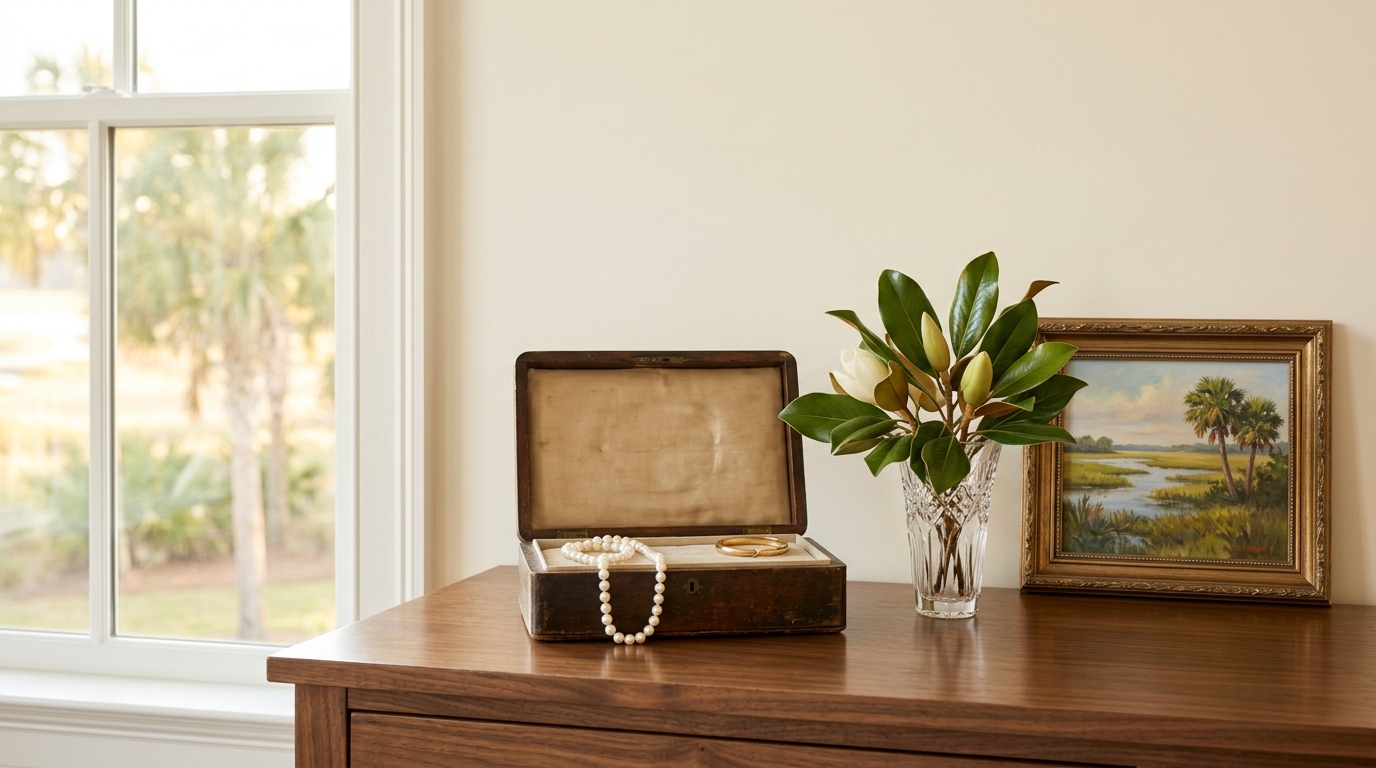
A standard homeowners policy in North Carolina or South Carolina does cover jewelry, art, and collections, but only up to special category limits that are often far below what those items would cost to replace. The Insurance Information Institute (Triple-I) notes that a typical policy keeps jewelry theft coverage relatively low, generally about $1,500, because jewelry is easy to steal.[1] South Carolina's Department of Insurance uses an even smaller illustration, saying most policies limit theft of furs or jewelry to $500, and it tells consumers to add a scheduled personal property endorsement when those caps are too low.[2] North Carolina's Department of Insurance makes the same point in plainer language: coverage is limited on jewelry, furs, manuscripts, and stamp or coin collections, additional amounts can be purchased, and you may want to schedule those items separately.[3]
Scheduled personal property jewelry coverage (sometimes called a personal articles floater) is the practical fix. You list specific pieces or a collection, attach an agreed or appraised amount, and buy broader protection that can follow the item when you wear it to dinner in Myrtle Beach, take it to a wedding in Charlotte, or pack it for a trip out of the Carolinas. This is not a scare story. It is a matching exercise: the value you actually own versus the special limits printed in Section I of your policy.
Practical takeaways
- Open your declarations page and the "Special Limits of Liability" section. Look for jewelry, watches, furs, silverware, firearms, and collections. Those figures are usually a category total for one loss, not a per-item allowance.[1][8]
- Add up wedding rings, heirloom brooches, watches, and loose stones you keep at home. If the combined retail replacement cost is higher than the jewelry theft limit, talk with us about scheduling.
- A receipt works for a recent purchase. An independent appraisal is often required for older, inherited, or high-value pieces, and it should be updated periodically.[5]
- Decide what needs its own line (an engagement ring you wear every day) versus what can sit in a collection schedule (coins, silver, a small art group).
- Keep photos, appraisals, and serial numbers off-site or in cloud storage. Triple-I's 2023 consumer survey found that only 47 percent of homeowners had prepared an inventory of their possessions.[7]
- Ask whether a scheduled endorsement covers accidental loss (a ring that slips off at the sink or a watch left in a hotel room), not only named perils such as fire or theft.[1]
- Ask about the deductible on scheduled items, whether settlement is replacement cost or an agreed amount, and whether coverage is worldwide.[5]
- Review the schedule after a purchase, an inheritance, a move between a coastal house and an inland home, or a noticeable change in art or jewelry prices.
What your homeowners policy already does, and where it stops
Personal property (Coverage C) is the part of a homeowners policy that pays for contents: furniture, clothing, electronics, and the everyday things in closets and drawers. Triple-I reports that most companies set this limit at 50 percent to 70 percent of the dwelling amount.[6] North Carolina DOI notes that Coverage C is normally 50 percent of Coverage A, or another amount you and the insurer agree on.[3] South Carolina DOI adds that contents coverage is often a flat percentage of the dwelling limit and can be increased without raising the house limit.[2]
That blanket contents limit is not the whole story. Inside Coverage C sit special limits for categories that are easy to steal or hard to value. North Carolina's basic homeowners guide lists cash, securities, jewelry, furs, manuscripts, and stamp or coin collections as property that is "especially susceptible to loss."[3] South Carolina's additional-coverages page says the homeowners program is designed for the average insured, that jewelry and fur theft is often capped (it uses $500 as the example), that firearms or computers are often limited to about $1,000, and that many other items sit at $500 or $1,000.[2] Those numbers are illustrations, not a promise that every Carolina policy uses the same figure. Your form may be higher or lower. The only number that matters is the one in your contract.
A widely used Insurance Services Office contents form (the 2011 HO-4 edition posted by Maine's insurance regulator) shows how these caps are written. The special limit for each category is the total for all property in that category in one loss, and it does not increase the overall Coverage C limit. That form lists $1,500 for theft of jewelry, watches, furs, and precious or semiprecious stones; $2,500 for theft of firearms; and $2,500 for theft of silverware and similar metalware.[8] If three rings and a watch are taken in one burglary, they share one jewelry theft pot. They do not each get their own $1,500.
Special limits most often bite on theft. Triple-I explains that jewelry, watches, and furs are still covered for the other perils on the policy, such as fire, windstorm, and vandalism, but the theft limit is kept low on purpose.[1] That is why a family can feel well insured after a kitchen fire and still be surprised after a break-in. The policy worked as written. The special limit did the work it was designed to do.
Why jewelry, art, and collections sit in a different bucket
Carolina households accumulate value in small objects. A pair of wedding bands bought in Charleston, a grandmother's pearls kept in a Concord dresser, a watch collection in a Greenville safe, a few original paintings in a Mount Pleasant living room, or a coin set started at a Myrtle Beach shop can add up faster than people expect. Those items also leave the house. Rings go to restaurants on the Grand Strand. Art gets loaned to a relative. Collections move with you between a beach cottage and an inland house.
Unscheduled contents coverage is built for sofas and clothing, not for portable, high-value pieces with thin markets. The National Association of Insurance Commissioners, in a February 2009 consumer insight that is still the Association's main jewelry explainer, warned that homeowners and renters policies often set a maximum for the combined value of all jewelry, and that the limit may be only a fraction of what you own.[5] The NAIC also noted that most policies protect against theft, while damage or mysterious loss may require extra wording.[5]
That is the gap scheduled personal property jewelry coverage is meant to close. It is not a judgment that your current policy is "bad." It is a way to treat a $12,000 ring as a $12,000 ring instead of as one more item competing for a few hundred or a couple of thousand dollars of category space.
How scheduled personal property jewelry coverage works
North Carolina DOI describes the tool in its optional-coverage guide. A Scheduled Personal Property Endorsement, sometimes called a personal article floater, covers high-value possessions that are more mobile than most household goods. Examples listed there include jewelry, furs, coins, guns, and computers.[4] South Carolina DOI uses the same endorsement name and tells consumers it is their job to review the limitations and, if needed, increase coverage in one area or another.[2] Triple-I defines a floater as coverage that applies to movable property wherever it is, commonly used for expensive jewelry.[6]
You generally have two ways to raise protection.[1]
- Raise the unscheduled jewelry (or silver, or collectibles) limit on the homeowners policy. This is often the less expensive option. Triple-I notes that you can still face a cap on any one piece and a cap on the whole category, for example $2,000 on a single item and $5,000 overall.[1] That can be enough for a modest set of pieces you rarely wear.
- Schedule individual items, or schedule a collection. Each listed item gets its own amount, usually tied to a receipt or appraisal. This costs more than a simple limit increase, and it is the broader option. Triple-I says floaters can cover losses the homeowners policy will not, including accidental losses such as dropping a ring down a kitchen drain or leaving an expensive watch in a hotel room.[1]
Before a carrier will schedule an item, it usually wants a professional appraisal. Triple-I recommends asking your insurance professional for a reputable appraisal firm.[1] The NAIC adds that some jewelers include an appraisal at purchase, that those figures can be inflated, and that an independent appraisal is often wiser. The Association also recommends periodic re-appraisal, photos of each item, and a copy of the appraisal in your home inventory.[5]
Settlement language matters as much as the dollar figure. The NAIC draws a clear line: replacement coverage aims to replace the item with a similar piece of equal value, while actual cash value pays the amount agreed in the policy (and can reflect depreciation).[5] Ask us which method a given carrier uses on scheduled jewelry, whether pairs and sets are treated as a unit, and what happens if a stone can be replaced but the mounting cannot.
Deductibles are not one-size-fits-all. The NAIC specifically tells shoppers to ask about options such as not having a deductible on jewelry.[5] Many scheduled endorsements use a low deductible or none, but you should see that in writing rather than assume it.
Jewelry you wear, jewelry you store, and items that travel
Not every piece needs the same treatment. The NAIC pointed out in that 2009 guidance that items worn daily, such as wedding and engagement rings, have more exposure to loss or damage than pieces worn only on special occasions. For very expensive items, insurers may also ask how the piece is stored and how often it is worn. The Association suggested asking about discounts for a home safe, an alarm system, or a safe-deposit box.[5]
That maps well onto Carolina life. A ring that never leaves a locked box in Charlotte is a different risk from a ring worn to the beach, on a boat, or through a humid summer wedding. A floater is built for movable property.[6] If you split time between the coast and the Piedmont, or you travel with a watch or a necklace, ask whether the schedule is worldwide. The NAIC lists that as a question to confirm before you buy, because some wording is domestic only.[5]
Scheduling does not replace common-sense care. It does mean that if a covered accidental loss happens away from home, you are not stuck arguing that a $1,500 (or $500) theft sublimit was supposed to stand in for a $9,000 ring.
Fine art, antiques, and collections
Jewelry gets the most attention, but art and collections use the same toolkit. North Carolina's manufactured-home guide, which repeats the Department's personal-property advice, says coverage is limited on property especially susceptible to loss, and it names art, jewelry, furs, and stamp or coin collections. Additional amounts may be purchased, and the Department again suggests scheduling those items separately.[9] The basic homeowners page adds manuscripts and securities to that list.[3] Triple-I groups collectibles with jewelry and furs when it discusses floaters.[1]
Art and collections raise extra questions:
- Valuation. A sofa has a retail equivalent. A regional painting, a signed print, or a 19th-century chest may not. An appraisal is how you and the carrier agree on a number.
- Uniqueness. If a piece cannot be replaced with "like kind and quality," you want to know whether the schedule pays the listed amount, pays to restore the work, or pays the current market value after a loss.
- Category math. Unscheduled silver, coins, or stamps can share one special limit the same way jewelry does.[8] A drawer of inherited flatware plus a small coin set can use up that pot quickly.
- Movement. Collections go to shows, restorers, and other houses. A floater is meant to follow movable property.[6]
You do not have to schedule every print on the wall. You should schedule the pieces whose loss would actually change your finances or that you could not reasonably replace from a store.
How to document values without turning it into a project
Triple-I gives three reasons to keep a home inventory: it helps you buy the right amount and type of insurance, it makes a claim easier, and it helps you substantiate losses for taxes or assistance.[10] The same 2023 Triple-I/Munich Re survey that found only 47 percent of homeowners had an inventory is a reminder that most families are guessing.[7] You do not need a perfect spreadsheet. You need a working list.
A practical Carolina version looks like this:
- Photograph jewelry on a neutral surface, front and back, with any hallmarks or inscriptions visible. Photograph art on the wall and the signature or foundry mark.
- Save PDFs of receipts, certificates, and appraisals in a folder that is not only on a laptop that lives in the house.
- Group everyday contents (clothes, furniture, kitchen) separately from candidates for a schedule.
- For a new purchase, send us the receipt while the ink is fresh. For an heirloom, budget an appraisal and then decide whether to schedule.
- Revisit the list when you buy, inherit, sell, or move. Jewelry and art markets change. An appraisal from a decade ago may not match today's replacement cost.[5]
Triple-I also reminds people to list brand names, model numbers, and where and when items were bought, and to store the inventory off the premises so it is not lost with the house.[6] That advice is as useful for a Pawleys Island cottage as it is for a Charlotte condo.
If you already have homeowners insurance with another agent or with us, this review does not require a full rewrite of the policy. It is a focused look at Coverage C special limits and at whether a scheduled endorsement or a separate personal articles policy is the cleaner fit.
How we can help
Beach Insurance LLC is an independent, Trusted Choice agency serving households across South Carolina and North Carolina, including the Myrtle Beach, Charleston, Charlotte, and Greenville areas. We shop 50-plus carriers, so we can compare how each company treats unscheduled jewelry limits, scheduled personal property jewelry coverage, fine art, and collections, rather than forcing one carrier's form onto every family.
Bring what you have: a declarations page, photos, receipts, or an old appraisal. We will read the special limits with you, flag items that sit above those caps, and quote a schedule or floater only for what you actually need. If a piece is better served by raising the unscheduled jewelry limit instead of listing it, we will say so.
Call (843) 626-9244, email info@beachinsurancellc.com, or request a free quote. If you would rather start with a conversation, use our contact page. The goal is simple: the rings, art, and collections you care about should be insured for what they are worth, not for a leftover category limit.
Citations
[1] Insurance Information Institute, "Special coverage for jewelry and other valuables." https://www.iii.org/article/special-coverage-for-jewelry-and-other-valuables
[2] South Carolina Department of Insurance, "Additional Homeowner's Insurance Coverages." https://doi.sc.gov/616/Additional-Homeowners-Insurance-Coverage
[3] North Carolina Department of Insurance, "Basic Homeowners Insurance." https://www.ncdoi.gov/consumers/homeowners-insurance/basic-homeowners-insurance
[4] North Carolina Department of Insurance, "Optional Coverage" (Scheduled Personal Property Endorsement). https://www.ncdoi.gov/consumers/homeowners-insurance/optional-coverage
[5] National Association of Insurance Commissioners, "Homeowners and Renters Insurance" consumer insight (Feb. 1, 2009). https://content.naic.org/article/consumer-insight-homeowners-and-renters-insurance
[6] Insurance Information Institute, "Insurance for Your House and Personal Possessions." https://www.iii.org/article/insurance-for-your-house-and-personal-possessions
[7] Insurance Information Institute, "Facts + Statistics: Homeowners and renters insurance" (2023 Triple-I/Munich Re Consumer Survey). https://www.iii.org/fact-statistic/facts-statistics-homeowners-and-renters-insurance
[8] Insurance Services Office, Homeowners 4 Contents Broad Form HO 00 04 05 11 (copyright 2010), posted by the Maine Bureau of Insurance. Special Limits of Liability, jewelry theft $1,500 (category total). https://www.maine.gov/pfr/insurance/sites/maine.gov.pfr.insurance/files/inline-files/ho00-04-05-11-homeowners4-contents-broad-form.pdf
[9] North Carolina Department of Insurance, "Manufactured Homes" (personal property limits on art, jewelry, furs, stamp or coin collections). https://www.ncdoi.gov/consumers/homeowners-insurance/manufactured-homes
[10] Insurance Information Institute, "Three reasons to take a home inventory." https://www.iii.org/article/three-reasons-to-take-a-home-inventory