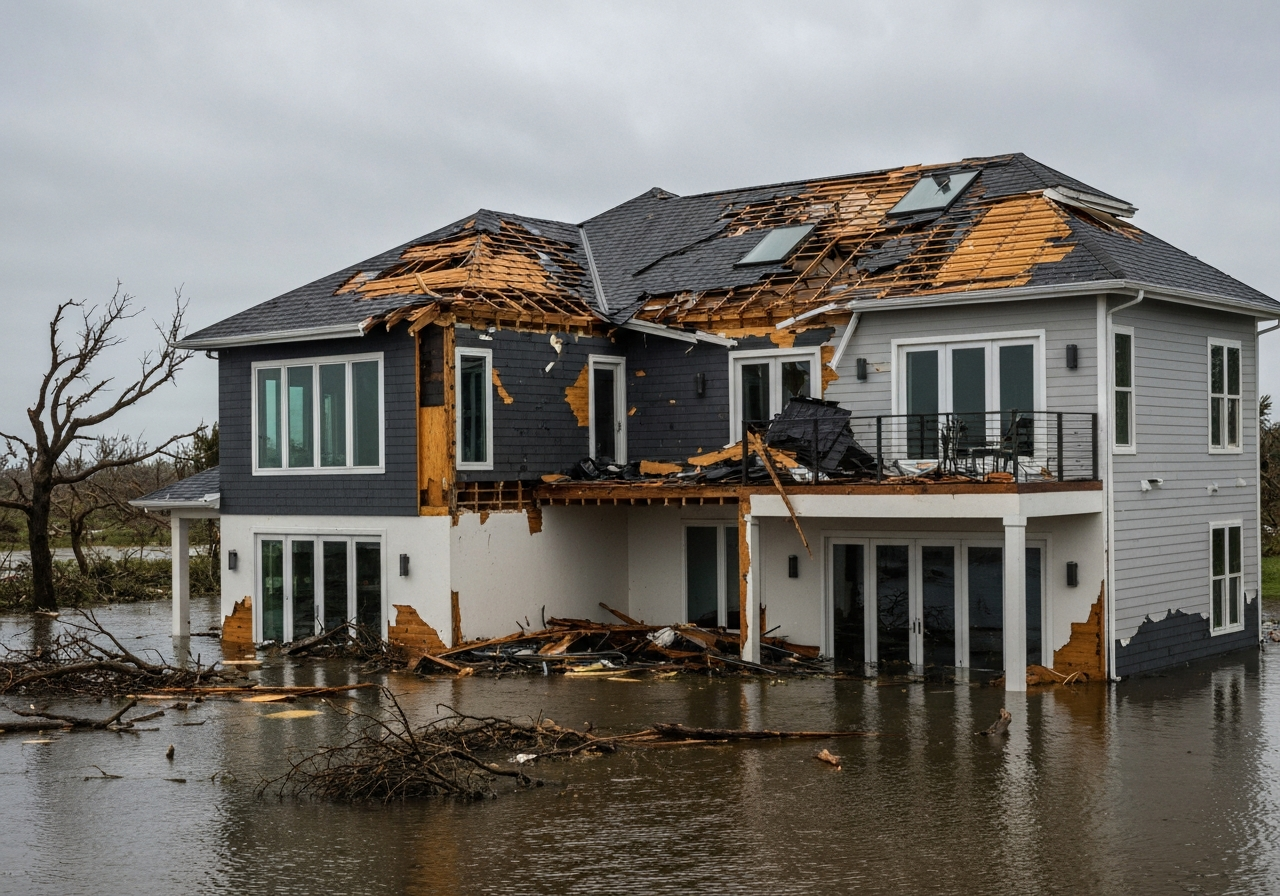
The Direct Answer: Does Homeowners Insurance Cover Hurricane Damage?
The question, does homeowners insurance cover hurricane damage, is one of the most critical for coastal residents, and the direct answer is often a complicated “yes and no.” In reality, there is no single policy called “hurricane insurance.” Instead, adequate hurricane protection is a combination of coverages, with a standard homeowners policy typically covering damage caused by wind, but strictly excluding damage caused by water and flooding. Understanding this distinction is the single most important lesson for homeowners preparing for the Atlantic hurricane season.
The Critical Distinction: Windstorm Damage vs. Flood Damage
In the world of insurance, the cause of the damage dictates which policy pays the claim. For hurricane events, this is divided into two primary perils: wind and water.
Windstorm Damage (Covered by Homeowners Insurance):
Standard homeowners insurance policies (such as an HO-3) generally cover sudden and accidental damage caused by wind and hail. This includes:
- Damage to your roof (shingles blown off, structural damage).
- Damage to the dwelling structure and siding from high winds.
- Damage caused by objects propelled by wind, such as a tree limb falling on the house.
In most hurricane-prone states, however, wind damage coverage comes with a critical caveat: a separate, and usually much higher, windstorm deductible. This is where most homeowners are surprised during a claim, as the out-of-pocket cost is significantly higher than a standard deductible.
Flood Damage (Excluded by Homeowners Insurance):
The vast majority of homeowners policies specifically exclude flood damage. This exclusion is a non-negotiable standard across the U.S. insurance industry, meaning wind-driven rain that enters through a damaged window or roof is covered, but water rising from the ground, known as storm surge or overland flooding, is not. As a coastal resident, ignoring this gap is financially catastrophic, as water damage is often the most extensive component of a hurricane loss, according to research on home insurance coverage for hurricanes.
Why You Need Separate Flood Insurance (And the 30-Day Waiting Period)
To secure comprehensive coverage for your property against the devastating effects of storm surge and rising water, a separate flood insurance policy is mandatory. This coverage is obtained either through the government-backed National Flood Insurance Program (NFIP) or from a private insurer. For residents in coastal areas like Charleston, SC, this insurance is not optional—it is essential.
The Crucial 30-Day Waiting Period
One of the most overlooked facts about flood insurance is the mandatory waiting period. New flood insurance policies typically do not take effect until 30 days after the purchase date. This rule is designed to prevent property owners from purchasing coverage only when a hurricane is already bearing down on the coast. The lesson is simple but vital: if you wait until a tropical storm is named, it is already too late to get flood coverage. Preparation must happen long before hurricane season begins.
Understanding Your Hurricane Deductibles: Percentage vs. Flat Rates
In high-risk areas, insurers manage their exposure to massive hurricane losses by applying a special deductible. Unlike the standard flat-rate deductible (e.g., $1,000), hurricane deductibles are typically calculated as a percentage of your home’s dwelling coverage limit.
The Financial Impact of Percentage Deductibles
These specialized deductibles generally range from 1% to 5% of the dwelling coverage, though in the highest risk zones, they can be as high as 10%. The financial implications are enormous. For a home with $400,000 in dwelling coverage, a 5% hurricane deductible means the homeowner is responsible for the first $20,000 in covered damages before the insurance company pays anything. This contrasts sharply with a fixed $1,000 standard deductible.
Some states, like Florida, mandate that insurers offer homeowners the choice of a flat-rate deductible (often $500), but opting for the lower fixed cost typically results in significantly higher annual premiums. It is essential to understand the calculation method on your policy’s declarations page to accurately gauge your financial exposure. For a detailed breakdown of how this is calculated, review your guide to understanding your hurricane deductible.
Essential Coverage: Dwelling, Personal Property, and Additional Living Expenses (ALE)
While the focus is often on the perils (wind vs. water), it is important to remember the core components of your policy that respond to a covered hurricane event. A comprehensive homeowners insurance policy provides several layers of financial protection:
- Dwelling Coverage (Coverage A): This covers the structure of your home, including the roof, walls, attached garage, and permanently installed fixtures. After a hurricane’s high winds damage the structure, this is the primary coverage used for rebuilding and repair.
- Personal Property (Coverage C): This protects your personal belongings inside the home, such as furniture, clothing, electronics, and appliances. It is critical to ensure this is set to a replacement cost value (RCV) rather than actual cash value (ACV), which factors in depreciation.
- Additional Living Expenses (ALE) (Coverage D): Often called “Loss of Use,” this coverage is a lifeline. If your home is rendered uninhabitable due to covered damage (e.g., wind damage forcing evacuation or major repairs), ALE pays for necessary increased living expenses, such as hotel bills, restaurant meals, and laundry costs, while your home is being restored.
It is important to note that if flood damage is the sole cause of the house being uninhabitable, your ALE coverage from a standard homeowners policy may not apply unless specifically endorsed or covered by your flood policy.
Coastal Considerations: Securing Windstorm Coverage in High-Risk Areas
For homes located closest to the coastline, insurers may take additional measures to reduce their exposure to hurricane risks. In some states, private insurance companies either severely restrict or completely exclude wind and hail damage from their standard homeowners policy. When coastal residents cannot obtain adequate wind coverage on the private market, they often rely on state-sponsored or quasi-governmental insurance pools, frequently called "wind pools" or FAIR plans, to secure this necessary protection.
Securing full hurricane protection often means layering policies from different carriers: a standard homeowners policy for non-wind/non-flood perils, a separate wind policy from a state association, and a third flood policy (NFIP or private). This layered approach, though complex, is necessary to fully close the coverage gap that standard insurance policies create for coastal homes. Coastal residents who rely solely on their standard home insurance may find they are unprotected when a hurricane strikes, as many insurers require homeowners in these zones to purchase coverage through specific state-backed wind plans, sometimes referred to as standalone windstorm insurance.
Ensure your policy explicitly details whether wind and hail are covered under your standard policy or if they are excluded and must be purchased through a separate policy or endorsement. This detail is essential for financial peace of mind.
Preventing Disaster: The Importance of a Pre-Season Policy Review
For homeowners, the time to understand your coverage is not when the evacuation orders are issued. Proactive planning is the most effective form of homeowner preparedness. Since the Atlantic hurricane season officially runs from June 1st through November 30th, the months preceding are the best time to act.
Three Key Review Steps:
- Verify Coverage Limits: Ensure your dwelling coverage limits are sufficient to cover the current cost of rebuilding your home, not just its market value. Construction costs fluctuate, and an inflation guard endorsement is highly recommended.
- Confirm Deductible Triggers: Review the language in your policy that defines what triggers your hurricane deductible (e.g., a named tropical storm, or a Category 1 hurricane). This precise language determines your out-of-pocket cost.
- Check Flood Policy Status: Verify that your flood insurance policy is active and that your dwelling and contents coverage limits are adequate. Remember, new policies require 30 days to become effective.
By taking a comprehensive look at your combined insurance package now, you empower yourself to navigate the financial aftermath of a storm with confidence, ensuring that your home and family are protected against the twin threats of wind and water that accompany any major hurricane event.
Don’t wait until it’s too late. Hurricane season demands more than just a standard policy. If you’re ready to ensure your home is fully protected against both wind and flood damage, take the next step. Contact Beach Insurance LLC for a comprehensive policy review today.