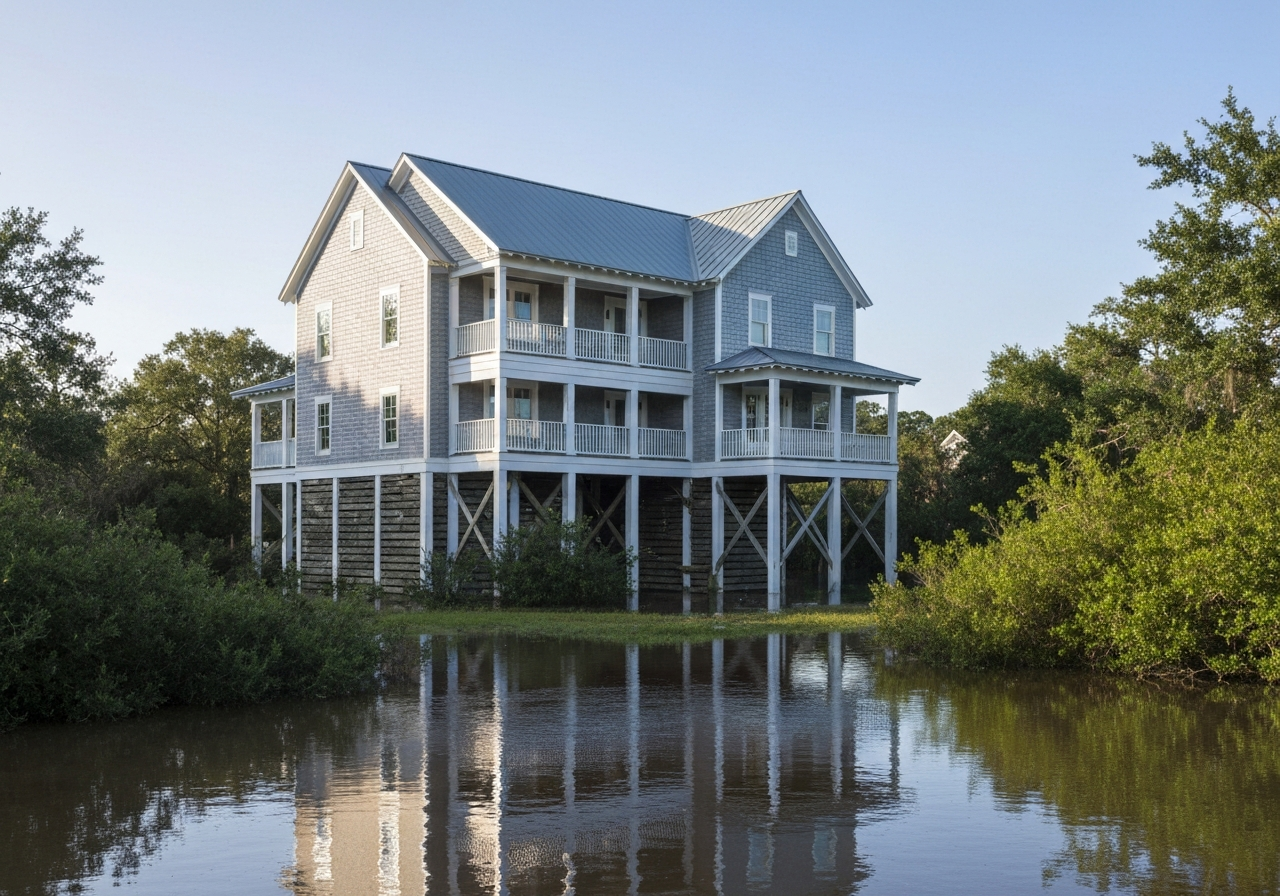

The Rising Tide: Why South Carolina Homes Need Flood Protection
Living in South Carolina offers beautiful coastlines and vibrant communities, but it also comes with the inherent risk of flooding. This is why having comprehensive Flood Insurance in South Carolina is not just a recommendation, but a critical necessity for protecting your home and financial future. Flooding is consistently ranked as the most frequent and costly natural disaster across the U.S., a reality acutely felt in the Palmetto State. Many homeowners mistakenly believe their standard homeowners’ insurance will cover flood damage. However, this is rarely the case. Standard policies typically exclude damage caused by rising water from external sources like overflowing rivers, heavy rainfall, or storm surges.
The danger isn’t confined to historically high-risk areas. A significant percentage of flood insurance claims originate from regions classified as low-to-moderate risk, demonstrating that any property can be vulnerable to floodwaters. Even a few inches of water can lead to tens of thousands of dollars in damage, underscoring the universal need for specific flood protection. Understanding your property’s unique flood risk is the first step toward safeguarding your investment.
Understanding Flood Insurance in South Carolina: What Standard Policies Don’t Cover
A crucial distinction homeowners in South Carolina must understand is the difference between wind and flood damage, especially during hurricane season. While most standard homeowners’ insurance policies cover damage caused by wind, a separate policy is almost always required for flood damage. This means if water enters your home from the ground up due to a storm surge, heavy rains causing rivers to overflow, or other external water sources, your standard homeowners’ policy will likely not provide coverage. Your homeowners policy from Beach Insurance LLC covers a wide range of perils, but flood is typically not one of them.
The definition of a “flood” in insurance terms is specific: it refers to a general and temporary condition of partial or complete inundation of normally dry land areas, affecting two or more acres of land or two or more properties. This distinction is vital because water damage from other sources, such as a plumbing leak or sewer backup not directly caused by a widespread flood event, would typically fall under your standard homeowners’ insurance. However, if that sewer backup is a direct result of broader flooding, it would generally be covered by flood insurance.
The National Flood Insurance Program (NFIP): Your Primary Resource
The National Flood Insurance Program (NFIP), managed by FEMA, is the primary source of flood insurance for property owners, renters, and businesses in participating communities throughout South Carolina. This federally backed program aims to reduce flood losses and provide financial protection. Under the NFIP, private insurers, known as Write-Your-Own (WYO) companies, issue Standard Flood Insurance Policies (SFIPs), but the coverage terms and rates are established by FEMA regulations.
Key aspects of NFIP coverage include:
- Coverage Limits: For residential properties, the NFIP provides a maximum of $250,000 for the building structure and $100,000 for contents. Non-residential buildings can receive up to $500,000 for the building and $500,000 for contents.
- Waiting Period: A significant consideration is the typical 30-day waiting period before an NFIP policy takes effect. This means policies cannot be purchased last-minute as a storm approaches, emphasizing the importance of proactive planning.
The NFIP works in partnership with communities that adopt and enforce floodplain management regulations, helping to mitigate future flood risks. You can find more comprehensive information about flood insurance and assess your flood risk by visiting FloodSmart.gov.
Crucial Considerations for Your SC Flood Insurance Policy
When securing Flood Insurance in South Carolina, several critical factors warrant your attention to ensure adequate protection. First, understanding your specific flood risk is paramount. FEMA’s Flood Insurance Rate Maps (FIRMs) illustrate a community’s flood zones and potential flood hazards. While mortgage lenders often mandate flood insurance for properties in high-risk zones, it’s advisable for all homeowners to assess their risk, as a substantial percentage of flood claims come from outside these areas.
The cost of flood insurance can vary based on several factors, including your location, the type of property, and efforts to mitigate flood risk. For example, options like elevating utilities, installing flood openings, or providing an Elevation Certificate can help reduce your premiums. Choosing a higher deductible can also lower your annual premium, though it means a greater out-of-pocket expense in the event of a claim.
It’s also essential to be aware of the specific provisions and potential pitfalls within NFIP policies:
- Definition of “Flood”: As mentioned, the NFIP’s definition of flood is specific, and not all water damage qualifies.
- Exclusions: Policies may exclude damage from moisture, mold preventable by the policyholder, earth movement (even if caused by flood), and financial losses like business interruption.
- Proof of Loss: NFIP policies impose strict requirements for filing claims, including submitting a sworn proof of loss with detailed documentation within 60 days of the loss.
- One-Year Suit Limitation: If a claim is denied, policyholders typically have only one year from the date of denial to file a lawsuit, a strictly enforced limitation.
These policy details highlight the importance of thoroughly reviewing your flood insurance policy before a disaster strikes. For a deeper understanding of NFIP policy pitfalls, policyholders in South Carolina should review detailed guidance on navigating these complexities, such as found in articles addressing NFIP flood insurance pitfalls.
Beyond NFIP: Exploring Private Flood Insurance Options in South Carolina
While the National Flood Insurance Program serves as a foundational resource, its coverage limits and specific exclusions may not always be sufficient for every homeowner’s needs. For properties exceeding the NFIP’s maximum coverage amounts, or for those seeking broader protection, exploring private flood insurance options in South Carolina is a viable solution. The South Carolina Private Flood Insurance Act has paved the way for a more robust private market, allowing policyholders to secure coverage that can be equivalent to or even exceed that offered by the NFIP.
Private flood insurance policies can offer several advantages, including:
- Higher Coverage Limits: Private insurers often provide higher limits for both building and contents coverage, which can be crucial for high-value homes or businesses.
- Broader Definitions of Flood: Some private policies may offer a more expansive definition of a “flood” or cover perils typically excluded by NFIP policies.
- Faster Claim Processing: While not guaranteed, some private insurers may offer more streamlined claims processes.
- No Waiting Period: Certain private flood insurance policies may have shorter waiting periods, or even no waiting period, for coverage to take effect.
It’s important to discuss excess flood coverage options with your insurance agent to determine if a private policy is the right fit for your property and assets, offering additional protection beyond standard NFIP limits. This additional protection is especially valuable in a state like South Carolina, where the threat of significant flood damage from events like hurricanes is an ongoing concern, as noted in recent reports on South Carolina flood risk.
Partnering for Protection: How Beach Insurance LLC Helps with Flood Coverage
Navigating the complexities of flood insurance can be challenging, but you don’t have to do it alone. At Beach Insurance LLC, we understand the unique flood risks faced by homeowners in South Carolina and are dedicated to helping you find the right coverage. As an independent insurance broker, we work for you, not the insurance carriers. This allows us to compare various options, including both NFIP and private flood insurance policies, to design a solution that truly fits your specific needs and budget.
Our experienced agents prioritize a consultative approach, ensuring you fully understand your options and can make informed decisions about protecting your home. We’re committed to providing practical, accurate guidance when you need it most, whether you’re evaluating your initial flood risk or seeking to enhance existing coverage. Protecting your personal assets, including your home, is our main priority, and our team has been serving clients across South Carolina for many years. We are your trusted partners in safeguarding what matters most, offering personalized service to help you secure comprehensive Flood Insurance in South Carolina.
Secure Your Future: The Essential Role of Flood Insurance for SC Homeowners
The imperative of securing robust Flood Insurance in South Carolina cannot be overstated. With the state’s diverse geography and susceptibility to various flood events, from coastal storm surges to inland heavy rainfall, every homeowner faces a potential risk. Relying solely on standard homeowners’ insurance leaves a critical gap in protection, as these policies almost universally exclude flood damage.
By understanding the nuances of the National Flood Insurance Program, exploring potential private flood insurance alternatives, and diligently reviewing policy details and exclusions, homeowners can build a resilient defense against financial devastation. Proactive planning, including purchasing a policy well in advance of potential flood threats due to the typical waiting period, is key to ensuring you are covered when it matters most. Ultimately, adequate flood insurance provides invaluable peace of mind, allowing you to focus on rebuilding and recovering should floodwaters ever impact your home.
Protect your South Carolina home from the rising tide. Contact Beach Insurance LLC today for comprehensive Flood Insurance.