Motorcycle Insurance South Carolina North Carolina
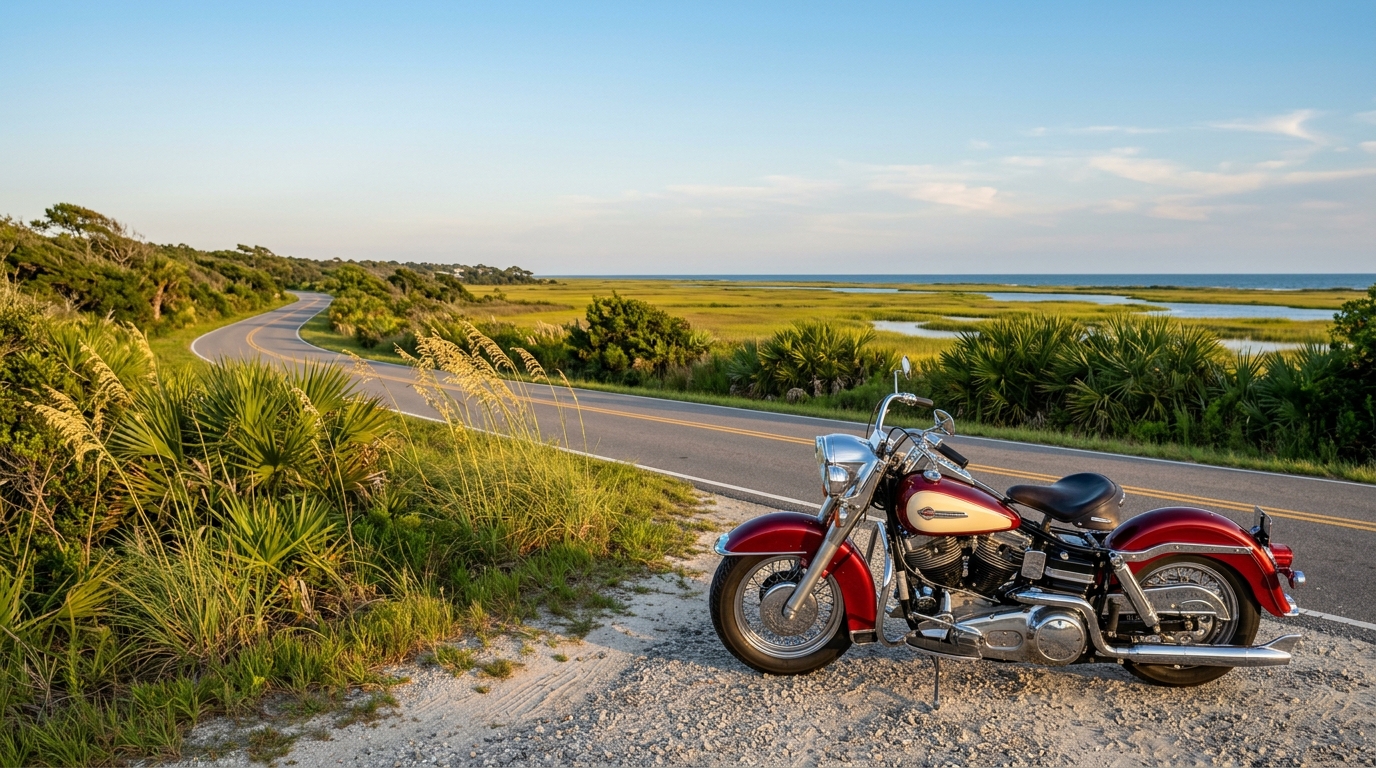
If you keep a motorcycle registered in South Carolina or North Carolina, you need liability insurance that meets that state's financial-responsibility rules. South Carolina's minimum liability limits are $25,000 per person and $50,000 per accident for bodily injury, plus $25,000 for property damage, and the state also requires uninsured motorist coverage at those same 25/50/25 floors.[1][2] North Carolina's current statute and Department of Insurance motorcycle page set the floor at $50,000 per person and $100,000 per accident for bodily injury, plus $50,000 for property damage, and they also require uninsured motorist coverage (with underinsured motorist coverage now built into new and renewed policies).[3][4] Collision, comprehensive, and extra coverage for custom parts or riding gear are usually optional, unless a lender requires physical damage. Seasonal storage does not pause those rules while the bike stays registered, and North Carolina is explicit that you should turn in the plate before you cancel liability.[5]
What “required” actually means on two wheels
Motorcycle insurance in South Carolina and North Carolina starts with the same idea as auto insurance. The required piece is liability, which pays other people if you cause injury or property damage. It does not repair your bike, replace your helmet, or cover your own medical bills.[6]
South Carolina's insurance code treats a motorcycle as an individual private passenger automobile and as a motor vehicle of “motorcycle type” when the policy is written on it.[2] That is why the same 25/50/25 liability statute that applies to cars also applies to highway motorcycles. North Carolina's motor vehicle law requires motorcycle and motor scooter operators to buy liability insurance, keep a valid insurance card with the bike or on the rider, and hold a motorcycle endorsement on the driver's license.[3]
Neither state publishes a legal premium, and we will not invent one here. What you pay depends on the bike, how it is used, where it is stored, your record, and the carrier. The useful work is matching the right limits and optional coverages to how you actually ride between the Grand Strand, Charleston, Charlotte, and coastal North Carolina.
South Carolina liability: 25/50/25 plus required uninsured motorist
South Carolina law does not allow an automobile insurance policy to be issued on a motor vehicle principally garaged or used in the state unless it includes bodily injury and property damage liability at these minimums:[2]
- $25,000 for bodily injury to one person in one accident
- $50,000 for bodily injury to two or more people in one accident
- $25,000 for injury to or destruction of other people's property in one accident
The South Carolina Department of Insurance explains those numbers in plain language. Bodily injury liability responds to claims from other people you injure (medical bills, lost wages, and pain and suffering). Property damage liability pays for damage you cause to someone else's vehicle, building, fence, or other property.[1]
Uninsured motorist coverage is not optional in South Carolina. State law says no automobile policy may be issued or delivered unless it includes an uninsured motorist provision with limits no lower than the 25/50/25 liability floors, including at least $25,000 for damage to the insured's property, though the form may exclude the first $200 of that property loss.[1][2] The Department of Insurance notes that this coverage is what pays if you are injured, or your property is damaged, by a hit-and-run driver or a driver with no insurance.[1]
You can buy more than the legal minimum. The statute says nothing stops an insurer from selling higher liability limits, and carriers must also offer (at your option) uninsured motorist coverage up to your liability limits and underinsured motorist coverage up to those same limits.[2] Underinsured motorist coverage is the piece that can respond when the at-fault driver has insurance, but not enough insurance to cover the damages. South Carolina requires insurers to offer it. It does not require you to buy it.[1]
SCDMV ties insurance to registration. You must name your insurance company the first time you register a vehicle in the state and every time you renew. South Carolina checks coverage electronically through the Automobile Liability Insurance Reporting (ALIR) system. If ALIR cannot verify insurance, registration and the license can be suspended.[7] Specialty motorcycle plate applications also ask for proof of insurance on the motorcycle.[8] If a law enforcement officer stops you and you cannot prove insurance, you can be ticketed. You then have 30 days to show you had coverage on the vehicle you were driving if you want to avoid a license suspension.[7]
North Carolina liability: 50/100/50, continuous coverage, and a card on the bike
North Carolina raised its statutory minimums. For policies issued or renewed on or after July 1, 2025, the required liability limits are $50,000 per person and $100,000 per accident for bodily injury, and $50,000 for property damage.[4][5] The current text of G.S. 20-279.21 uses those same 50/100/50 figures, and the North Carolina Department of Insurance motorcycle page lists them as the motorcycle minimums.[3][9]
Those higher limits apply to more than liability. North Carolina law also requires uninsured motorist coverage on motor vehicle liability policies, including property damage, and NCDMV states that uninsured and underinsured motorist coverage is required along with the bodily injury and property damage minimums.[5][9] Beginning July 1, 2025, underinsured motorist coverage is included in all new or renewed policies (older minimum-limit policies did not automatically include it).[4]
Two North Carolina rules surprise seasonal riders more than the dollar amounts.
First, every vehicle with a valid North Carolina registration must have continuous liability insurance from a company licensed in North Carolina. Out-of-state policies are not accepted.[5] G.S. 20-309 says a motor vehicle may not be registered unless the owner shows financial responsibility, and the owner must keep that responsibility in force for the entire registration period. If liability insurance is cancelled or not renewed, the owner must surrender the registration certificate and plates unless coverage is replaced another legal way.[10]
Second, NCDMV is blunt about storage. Because continuous coverage is required on registered vehicles, you should cancel insurance only after you have turned in the North Carolina plate. Canceling first produces a fine for failing to maintain continuous coverage. An owner storing a vehicle for an extended period should return the plate before canceling liability.[5] Insurers must notify NCDMV if coverage is cancelled or lapses. NCDMV then sends a termination notice. Civil penalties for lapses start at $50 for a first lapse, with higher amounts for later lapses in a three-year window, plus restoration fees if the plate is revoked.[5]
North Carolina also requires a motorcycle endorsement on the license, and the Department of Insurance says a valid insurance card must stay with the motorcycle or scooter or be carried by the operator.[3] NCDMV's motorcycle page explains how to add that endorsement through testing or an approved Motorcycle Safety Foundation Basic Rider Course (or certain military or out-of-state credentials).[11]
Optional physical damage: collision, comprehensive, and actual cash value
Liability pays other people. Physical damage pays for your motorcycle.
The Insurance Information Institute describes the two common parts. Collision coverage pays for damage to your motorcycle after a crash with another vehicle (subject to the deductible, usually based on the bike's book value before the loss). Comprehensive coverage pays for damage from events other than a collision, such as fire, theft, or vandalism, again minus the deductible and limited to book value.[6] The North Carolina Department of Insurance uses similar language: collision is impact damage and pays the lesser of repair cost or actual cash value (replacement cost less depreciation). “Other than collision” coverage addresses falling objects, fire, theft, hail, glass breakage, contact with animals, and similar losses.[3]
South Carolina's Department of Insurance makes the same split for auto physical damage and notes that collision and comprehensive are optional to purchase, though a lender may require them.[1] That lender point matters for a financed or leased bike in either Carolina. The bank's interest is the motorcycle, so the bank often requires collision and comprehensive until the loan is paid.
Actual cash value is the number most riders underestimate. A five-year-old cruiser that still looks sharp is not insured for what you paid, and it is not insured for what a new replacement costs. After a total loss, the check is the bike's depreciated value minus the deductible. If you have added pipes, bags, a windshield, or a custom seat, those dollars may not be in the settlement unless you scheduled them. That is the bridge to gear.
Gear, custom parts, and what the policy actually covers
A motorcycle policy is written on the motorcycle, not on every jacket in the closet. The Insurance Information Institute is direct about aftermarket work: many comprehensive and collision policies cover only the factory-standard parts, or they limit what they will pay for add-ons. If you add chrome, a custom paint job, a trailer, or a sidecar, you should ask the insurer what the policy will actually pay.[6] Guest passenger liability, which can respond if a passenger is injured on your bike, may also be available depending on state law and the company.[6]
That is the practical “gear” conversation we have with Carolina riders:
- Factory bike versus the bike you built. Photograph the motorcycle, keep receipts for accessories, and tell us what you added. If the policy only contemplates stock parts, a fair settlement after a theft or crash will not rebuild the custom work.
- Accessories attached to the bike versus apparel you wear. Fairings, luggage, crash bars, and similar equipment belong in the motorcycle conversation. Helmets, jackets, boots, and armor are often treated differently by form. Do not assume they follow the bike automatically. Ask how your specific policy handles riding apparel, and whether a scheduled accessory limit, a personal-articles item, or a homeowners or renters policy is the cleaner place for high-value gear.
- Passenger setup. If you regularly carry a spouse or friend, ask whether guest passenger liability is included or needs to be added.[6]
- Training and how you ride. Some insurers offer discounts for graduates of a Motorcycle Safety Foundation rider course. III notes that this is especially useful for riders under 25, who are usually treated as a higher risk, and for riders who have already had accidents.[6] Completing an approved MSF Basic Rider Course is also one of the ways North Carolina lets you meet the skills requirement for a motorcycle endorsement.[11]
None of that is a scare pitch. It is inventory. The same way you would not insure a renovated coastal house as a builder-grade cottage, you should not insure a dressed-out touring bike as a stock commuter.
Uninsured and underinsured motorist choices for riders
Riders spend more time exposed to other drivers' mistakes than those other drivers spend thinking about motorcycles. Uninsured and underinsured motorist coverage is how your own policy can respond when the other person has no insurance, not enough insurance, or leaves the scene.
III describes UM/UIM as paying for damages to you and, in some cases, your property when the other driver is uninsured or underinsured. Typical payments include medical treatment, lost wages, and sometimes property damage.[6] That is a general industry description. The state rules still control what you must buy and what you may add.
In South Carolina, the mandatory UM layer matches the 25/50/25 liability floor, usually with a $200 property-damage deductible.[1][2] You can elect higher UM limits, up to your liability limits, and you can elect UIM.[2] Because the legal liability floor is still $25,000 per person, a rider who only carries the minimum is relying on a thin layer from the other driver and a thin mandatory UM layer from their own policy. Raising liability and matching UM/UIM is often the more useful decision than arguing about a few dollars of comprehensive deductible.
In North Carolina, UM is required on the liability policy, including property damage, and the UM bodily injury limits default to the highest bodily injury limits on the policy (subject to a $1 million cap unless you buy more, and subject to a $100 per-insured exclusion on UM property damage).[9] Named insureds can buy different UM limits, but not below the statutory liability minimums.[9] UIM is now included on new and renewed policies, and the July 2025 law also changed how an underinsured vehicle is identified (by the injured person's total damages, not only by comparing policy limits) and limited many setoffs.[4] NCDOI describes UIM as protection if you are hit by a driver who does not have enough coverage to pay for the bodily injuries they caused.[3] Collision remains the coverage that would repair your own motorcycle after a crash.[3]
How common is the uninsured driver? Date the numbers. The Insurance Research Council estimated that 14.0 percent of U.S. motorists were uninsured in 2022, about one in seven drivers. In that same 2022 state table, South Carolina was estimated at 12.3 percent and North Carolina at 10.3 percent.[12] NAIC, updating its uninsured-motorists topic on July 30, 2025, cites a later IRC figure of 15.4 percent uninsured nationwide in 2023.[13] Those are auto-market estimates, not motorcycle-only counts, and they are not a reason to panic. They are a reason to treat UM and UIM as real coverage, not boilerplate.
Medical payments coverage is a separate, optional conversation. NCDOI describes it as paying reasonable medical and funeral expenses up to the policy limit for you, household family members, and occupants of the covered vehicle.[3] It can sit beside health insurance and UM. It is not a substitute for either.
Seasonal use, storage, and why “I'll just cancel it for winter” is the wrong first move
Plenty of Carolina riders park the bike from late fall through early spring. Humidity, salt air, and a garage that is also a workshop make storage a real coverage question. The wrong shortcut is cancelling the whole policy because the bike is on a battery tender.
III lists “where you store your bike” among the factors that affect motorcycle insurance cost, along with the type of bike, its age, and how many miles you ride.[6] III also describes a “lay-up” policy, used primarily in northern states, that suspends all coverage except comprehensive during the winter months when the bike is not being used.[6] That northern product is not something you should assume exists on a Myrtle Beach, Charleston, or Charlotte policy. Some carriers will adjust usage, suspend collision and liability during a stated storage period, or keep comprehensive in force for theft and fire. Others will not. Ask before you change anything, and get the change in writing on the declarations page.
North Carolina's storage rule is not optional wording from a carrier. If the plate stays on a registered motorcycle, liability must stay in force. If you plan to store the bike for months and you truly will not ride, turn the plate in first, then change or cancel the liability. Keep comprehensive in mind even then, because a stored motorcycle can still be stolen, burned, or vandalized, and comprehensive is the coverage III associates with those non-crash losses.[5][6]
South Carolina does not publish a “turn in the plate first” sentence in the same way, but it does verify coverage continuously through ALIR. A cancellation that the insurer reports, with no replacement policy, can leave the registration unverifiable and put the registration and license at risk.[7] If the motorcycle remains registered, keep the required liability and UM in force. If you are done riding it for the year and you want to drop coverage, close the registration loop with SCDMV first rather than hoping a parked bike is invisible to ALIR.
A practical off-season checklist for both states:
- Decide whether the bike will be ridden at all. One warm Saturday in February is still use. If you might roll it out, keep liability active.
- Tell us where it will sit (locked garage, carport, storage unit, driveway). Storage is a rating and a theft question.[6]
- Keep comprehensive if the bike has real replacement value, even if you suspend collision.
- Inventory custom parts and gear before the cover goes on.
- Do not cancel a North Carolina policy while the plate is still issued.[5]
- In South Carolina, do not create an ALIR gap on a still-registered motorcycle.[7]
- If you sell the bike or move it out of state, handle plates, title, and the policy in that order, not the reverse.
How the two states compare, side by side
The easiest way to keep motorcycle insurance in South Carolina and North Carolina straight is to treat the states as cousins, not twins.
South Carolina's legal floor is still 25/50/25, with mandatory UM at that floor and a typical $200 UM property-damage deductible. UIM is offered, not mandated. Motorcycles are written into the automobile insurance definitions. SCDMV checks coverage through ALIR at registration and renewal.[1][2][7]
North Carolina's legal floor, for policies issued or renewed on or after July 1, 2025, is 50/100/50. UM is required, UIM is now included on new and renewed policies, and a registered motorcycle must carry continuous liability from an in-state-licensed company. The insurance card belongs with the bike or the rider, and the operator needs a motorcycle endorsement.[3][4][5]
In both states, collision and comprehensive remain the tools for the motorcycle itself. In both states, custom parts and riding gear need a separate look. In both states, seasonal parking is a plate-and-policy problem, not a reason to go bare.
If you ride on both sides of the state line, garaging address still controls the policy. A bike kept in Horry or Charleston County is a South Carolina risk. A bike kept in Brunswick, New Hanover, or Mecklenburg County is a North Carolina risk. Visiting the other state on a weekend does not rewrite the statute that applies at home, but it does mean you should carry the card and understand that the other driver's minimums may be different from yours.
Practical takeaways
- Carry at least South Carolina's 25/50/25 liability and required UM if the motorcycle is an SC risk, and treat those numbers as a legal floor, not a recommendation.[1][2]
- Carry at least North Carolina's 50/100/50 liability if the motorcycle is an NC risk on a policy issued or renewed on or after July 1, 2025, and keep UM/UIM in the conversation rather than assuming the old 30/60/25 world still applies.[3][4][5]
- Do not cancel North Carolina liability while the plate is still issued. Turn the plate in first if the bike is going into true storage.[5]
- Do not leave a South Carolina motorcycle registered if ALIR will no longer see a policy on it.[7]
- Buy collision and comprehensive when the bike (or the lender) has value you cannot comfortably replace out of pocket. Settlements are actual cash value, not new-bike price.[1][3][6]
- Schedule or document custom parts. Ask how helmets and riding apparel are treated on your form.[6]
- Consider higher liability with matching UM, and in South Carolina decide on UIM instead of leaving it on the table.[1][2][12]
- Ask us about storage, stated lay-up, and multi-policy placement before you change anything for winter. III describes lay-up as primarily a northern product, so do not assume it is already on your Carolina policy.[6]
- Keep the insurance card with the bike in North Carolina, and keep proof available in South Carolina. Add or keep the motorcycle endorsement on an NC license.[3][7][11]
How we can help
Beach Insurance LLC is an independent agency. We shop motorcycle coverage the same way we shop personal insurance and auto coverage for households in Myrtle Beach, Charleston, Charlotte, and coastal North and South Carolina. If you want a second set of eyes on liability limits, UM/UIM, gear, or a winter storage plan, request a quote or call (843) 626-9244. You can also reach us at info@beachinsurancellc.com. We will compare options from the carriers we represent and explain what is required in your state before we talk about anything optional.
Citations
- South Carolina Department of Insurance, "Automobile Insurance" (2026)
- South Carolina General Assembly, "Title 38, Chapter 77, Automobile Insurance (Sections 38-77-30, 38-77-140, 38-77-150, 38-77-160)" (current code)
- North Carolina Department of Insurance, "Motorcycle Insurance" (2026)
- North Carolina Department of Insurance, "Changes to the Rating of Automobile Insurance Policies, Effective July 1, 2025" (2025-07-01)
- N.C. Division of Motor Vehicles, "Vehicle Insurance Requirements" (2026)
- Insurance Information Institute, "Motorcycle insurance" (2026)
- SCDMV, "Insurance Requirements" (2026)
- SCDMV, "Motorcycle Plates" (2026)
- North Carolina General Assembly, "G.S. 20-279.21. Motor vehicle liability policy defined" (current statute)
- North Carolina General Assembly, "G.S. 20-309. Financial responsibility prerequisite to registration" (current statute)
- N.C. Division of Motor Vehicles, "Motorcycle & Moped Privileges" (2026)
- Insurance Information Institute, "Facts + Statistics: Uninsured motorists" (2022 IRC estimates)
- National Association of Insurance Commissioners, "Uninsured Motorists" (2025-07-30)