detached structures coverage Carolina homeowners limits
The section to read for detached structures coverage Carolina homeowners policies is Coverage B, the part of the contract for structures set apart from the house. The North Carolina Department of Insurance says that limit is normally 10 percent of the Coverage A dwelling limit, names detached garages and tool sheds among the items protected, and says a higher limit can be purchased for an additional premium [1]. The South Carolina Department of Insurance lists a detached garage, a work shed, or fencing as examples and tells readers to check the policy for the real limits [3]. A dock is not named on those pages, so the declarations page, not a guess, decides whether a pier shares the Coverage B dollars.
What stays with the house
Coverage A is the dwelling. The North Carolina department describes it as protection for the house and attached structures when a covered loss occurs, and it says the Coverage A amount is normally the money required to rebuild the home [1]. Land under the house is not part of that replacement-cost figure [1]. A 2023 Insurance Information Institute handbook adds a pricing point: the price paid for a house, or the later market price, can sit above or below the cost to rebuild [6]. On a lot in Charleston, Horry County, the Grand Strand, or coastal North Carolina, a high land value does not, by itself, enlarge Coverage B. The percentage rides on the dwelling limit, and the land is left out of the rebuild math [1].
Coverage B, in that North Carolina description, protects structures on the residence premises that are not attached to the dwelling [1]. A garage under the same roof stays with Coverage A [1]. A garage with open ground between it and the house is the kind of building the North Carolina page places under Coverage B, along with a tool shed [1].
South Carolina's department is more cautious. One page says a garage, a tool shed, or a gazebo is covered in some policies, and it says to read the policy [4]. A second page lists a detached garage, a work shed, or fencing, and it says to read the policy to know the limits [3]. The 2023 handbook says most policies cover a garage, a tool shed, or a gazebo, generally for about 10 percent of the insurance on the structure of the house [6]. Where a percent is stated, that is the usual setting, and the declarations page prints the dollar limit.
We see this section on policies for clients in Charleston, Charlotte, coastal South Carolina, and coastal North Carolina. The form still decides the details. A package can include the limit even when the lot has no shed. The North Carolina department says a homeowners policy is a package built for most households, and that issuing it that way costs less than tailoring every contract, which is why the policy can include coverage a particular lot does not use [2].
How the percentage becomes a dollar limit
The North Carolina department says Coverage B is normally limited to 10 percent of the Coverage A limit [1]. The 2023 handbook uses nearly the same figure, about 10 percent, tied to the amount of insurance on the structure of the house [6]. The South Carolina pages that name garages, sheds, gazebos, and fencing do not state a percent [3][4]. Where those descriptions differ, we do not average them. We read the declarations page.
The North Carolina page describes one Coverage B limit, then lists more than one kind of building that coverage protects [1]. Detached garages and tool sheds sit under that single limit in the department's wording, not under a fresh percentage for each building [1]. A fence, where the form includes fencing, draws on the same dollars. So does a second shed. The right comparison is the rebuild cost of every structure set apart from the house, added together, set next to the one Coverage B amount.
Coverage A is the base, so a thin dwelling limit produces a thin Coverage B limit. The North Carolina department says dwelling coverage should equal at least 80 percent of the full replacement cost of the dwelling, and that falling short of 80 percent can mean the insurer does not pay the full cost to rebuild the house [1]. On that page, replacement cost uses materials of similar kind and quality, with no deduction for depreciation, and land is excluded [1]. The 2023 handbook says a limit based on the mortgage, which some lenders require, may not be enough to rebuild [6]. North Carolina law does not require the policy, but a lender may require it when the home is mortgaged [1].
North Carolina also describes an 80 percent test for structures set apart from the house [1]. The department says coverage should equal at least 80 percent of the full replacement cost of those structures, and that contract language can reduce the amount payable when Coverage B sits below that mark [1]. A large detached garage can fall short even when the normal 10 percent setting was never changed, and more coverage may be purchased for an additional premium [1]. The South Carolina pages cited here do not state that replacement-cost test, so the contract has to be read there [3][4].
Garages, sheds, and fences
A detached garage is named by both state departments and by the 2023 handbook [1][3][4][6]. A tool shed or work shed is named the same way [1][3][4][6]. A gazebo is named by the South Carolina department and by the handbook [4][6]. Fencing is named by the South Carolina department in the same sentence as a detached garage and a work shed [3]. If the garage is attached, the North Carolina guide treats it as part of Coverage A, not as Coverage B [1].
The North Carolina page says detached garages, tool sheds, and so on, so the examples are not a closed catalog and not a promise that every fence is included [1]. A long run of fencing can still take a large share of one Coverage B limit, so the fence belongs in the same rebuild total as the garage and the shed [1][3].
Items stored inside are a different line from the walls and the roof. North Carolina's guide lists Coverage B and personal property as separate sections [1]. On a South Carolina page answering a wind question, the department says most homeowners policies cover wind damage to the dwelling, and that the policy also covers storage buildings and outside structures on the insured premises, including personal items inside the building [5]. Tools and stored furniture belong on a list, and the declarations page shows which dollar limit is meant to respond [1][5]. That wind answer says most policies, not every policy [5].
Docks
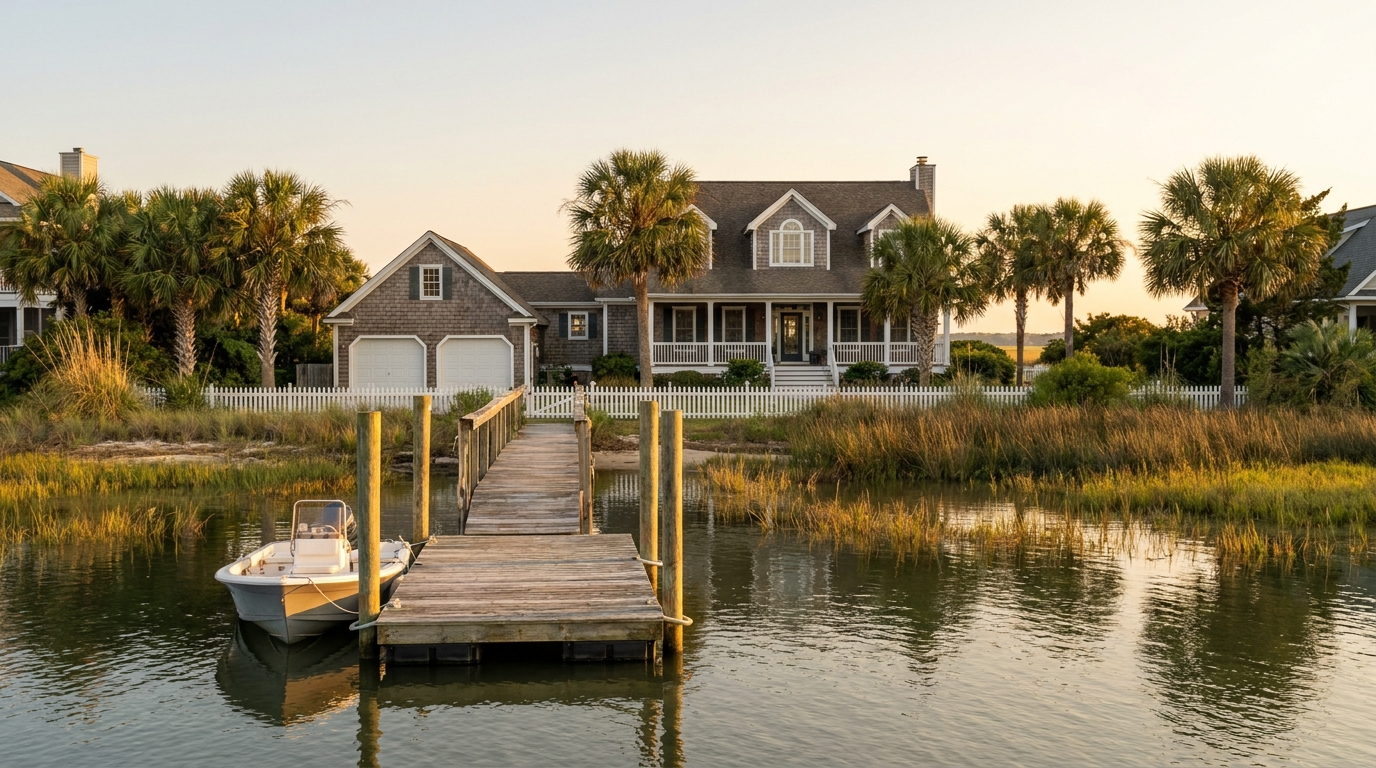
Docks and piers are part of daily life on lots in Charleston, the Grand Strand, Horry County, and coastal North Carolina. They are also the item these public pages do not name. The North Carolina examples are detached garages, tool sheds, and an open ending [1]. The South Carolina examples are a detached garage, a work shed, fencing, and, on a second page, a gazebo [3][4]. The 2023 handbook's examples are a garage, a tool shed, or a gazebo [6]. None of those sentences says dock or pier.
Silence is not an exclusion, and it is not coverage. A dock may be a structure set apart from the house. The form may include it, leave it off, or require a schedule. We do not guess which of those is true. When we review a coastal file, we ask three plain questions. Is the dock inside Coverage B? If it is, does it share the single Coverage B dollar limit with the garage, the shed, and the fence? If it is not, is there a separate schedule, or is the dock left off that policy?
Flood is a separate contract. The North Carolina department states that homeowners policies do not cover flood or rising water, and that flood coverage can be purchased through the National Flood Insurance Program [2]. The basic North Carolina guide adds that most policies do not protect against earthquakes, mudslides, mudflows, or landslides [1]. South Carolina's department says most homeowners and fire policies will not cover flood or rising water, so a flood policy is generally needed [5]. The 2023 handbook says a standard policy will not pay for flood, earthquake, or routine wear and tear [6]. The institute's disaster guide states that flood damage is excluded, with a separate policy available from the National Flood Insurance Program and from a few private insurers [7]. Rising water sits outside those homeowners forms. A dock damaged by a peril the form actually covers is a Coverage B question only when the form includes the dock.
The South Carolina department agrees that a standard policy will not pay for routine wear and tear [4]. Maintenance of a dock, a fence, or a shed stays with the owner. The policy responds to a covered loss, not to gradual decline.
Wind and the deductible line
Wind is not written the same way on every coastal policy. The North Carolina department says that, in some cases, a standard homeowners policy may exclude windstorm or hail, and that a separate policy for those perils may be available [1]. The Insurance Information Institute notes a Coastal Property Insurance Pool that offers windstorm coverage, and homeowners coverage, in the 18 eligible coastal counties of North Carolina [8]. It also notes that the South Carolina Wind and Hail Underwriting Association can insure windstorm and hail in certain coastal areas when that coverage has not been available elsewhere [8]. South Carolina's department says most homeowners policies cover wind damage to the dwelling and also cover storage buildings and outside structures on the insured premises [5]. The institute's disaster chart lists windstorm or hail on common homeowners forms, including the HO-3 form, and says policies vary [7].
Deductibles apply before those dollars move. The North Carolina department says a deductible can be a fixed amount or a percentage of the total dwelling coverage amount, and that some property owners have a separate windstorm, hail, or named storm deductible [2]. It says to review the deductibles listed on the declarations page, because the options vary [2]. South Carolina's department says most homeowners forms apply a deductible to Section I losses, and the list includes the dwelling, the appurtenant structure, unscheduled personal property, and additional living expenses [5]. The type and amount vary by company, and some companies offer a deductible that applies only to wind or hail [5]. The South Carolina page uses "appurtenant structure" in that deductible list. The North Carolina guide describes the same idea, structures not attached to the dwelling, as Coverage B [1][5].
The Insurance Information Institute lists North Carolina and South Carolina among 19 states and the District of Columbia that have hurricane deductibles [8]. On that page, percentage deductibles are described as typically running from 1 percent of a home's insured value to 5 percent, with higher percentages possible in some coastal areas where wind risk is high [8]. For South Carolina, the institute states that an insurer must notify the policyholder when a policy contains a separate deductible for hurricane, named storm, or wind and hail damage, must explain the trigger, and must show an example based on a policy valued at $100,000 [8]. That example is not a rebuild estimate and not a premium [8]. A percentage deductible follows insured value, so the out-of-pocket amount changes with that value instead of staying a flat dollar figure [8].
When the normal limit is too small
A workshop garage, a long fence, and a dock, if the dock is inside the limit, can pass the normal percentage of Coverage A. The North Carolina department says more Coverage B can be purchased for an additional premium [1]. The practical step is a rebuild total for every structure set apart from the house, set beside the Coverage B dollars on the declarations page [1]. If the total is higher, ask whether the limit can be raised, and, in North Carolina, whether the limit still meets the 80 percent replacement-cost test the department describes [1].
On the declarations page, compare Coverage A with Coverage B and see whether Coverage B is the normal 10 percent of Coverage A or a different amount [1][6]. List the garage, each shed, the fence, any gazebo, and any dock, then read the deductible lines, including any windstorm, hail, named storm, or hurricane deductible [2][5][8]. If wind sits on a separate contract, which the North Carolina department says some standard policies use, confirm that contract describes the garage, the fence, and any dock [1]. In South Carolina, use the same comparison even though the cited pages do not print a default percent [3][4]. We will not invent a dock sublimit. More on the parts of a homeowners policy is on our homeowners coverage page.
Practical takeaways
- Coverage B is the section for structures set apart from the house. Coverage A is the house and what is attached to it [1].
- In North Carolina, that Coverage B limit is normally 10 percent of the Coverage A limit, and a higher limit can be purchased for an additional premium [1].
- A 2023 Insurance Information Institute handbook describes about 10 percent on most policies for a garage, a tool shed, or a gazebo [6].
- South Carolina's department names a detached garage, a work shed, fencing, and, in some policies, a gazebo, and it says to read the policy for the limits [3][4].
- Those public pages do not name docks. Confirm on the declarations page before counting on Coverage B for a pier.
- Add the rebuild cost of every structure set apart from the house and compare the total with the single Coverage B dollar amount [1]. In North Carolina, payment can be reduced if that limit is below 80 percent of the full replacement cost of those structures [1].
- Homeowners policies do not cover flood or rising water [2]. A standard policy also does not pay for routine wear and tear [4][6].
- Check the declarations page for a windstorm, hail, named storm, or hurricane deductible. North Carolina and South Carolina are both on the institute's list of states with hurricane deductibles [8].
How we can help
Our team can match each structure set apart from the house to the declarations page and compare the Coverage B limit with the rebuild cost.
Have more questions or want to get in touch?
Citations
- North Carolina Department of Insurance, "Basic Homeowners Insurance" (2026)
- North Carolina Department of Insurance, "Homeowners Insurance Questions and Answers" (2026)
- South Carolina Department of Insurance, "Types of Coverage in a Homeowner Policy" (2026)
- South Carolina Department of Insurance, "Understanding Basic Homeowners Insurance" (2026)
- South Carolina Department of Insurance, "Homeowner Coverage Questions" (2026)
- Insurance Information Institute, "Homebuyers Insurance Handbook" (2023)
- Insurance Information Institute, "Which Disasters Are Covered by Homeowners Insurance" (2026)
- Insurance Information Institute, "Background on Hurricane and Windstorm Deductibles" (2026)