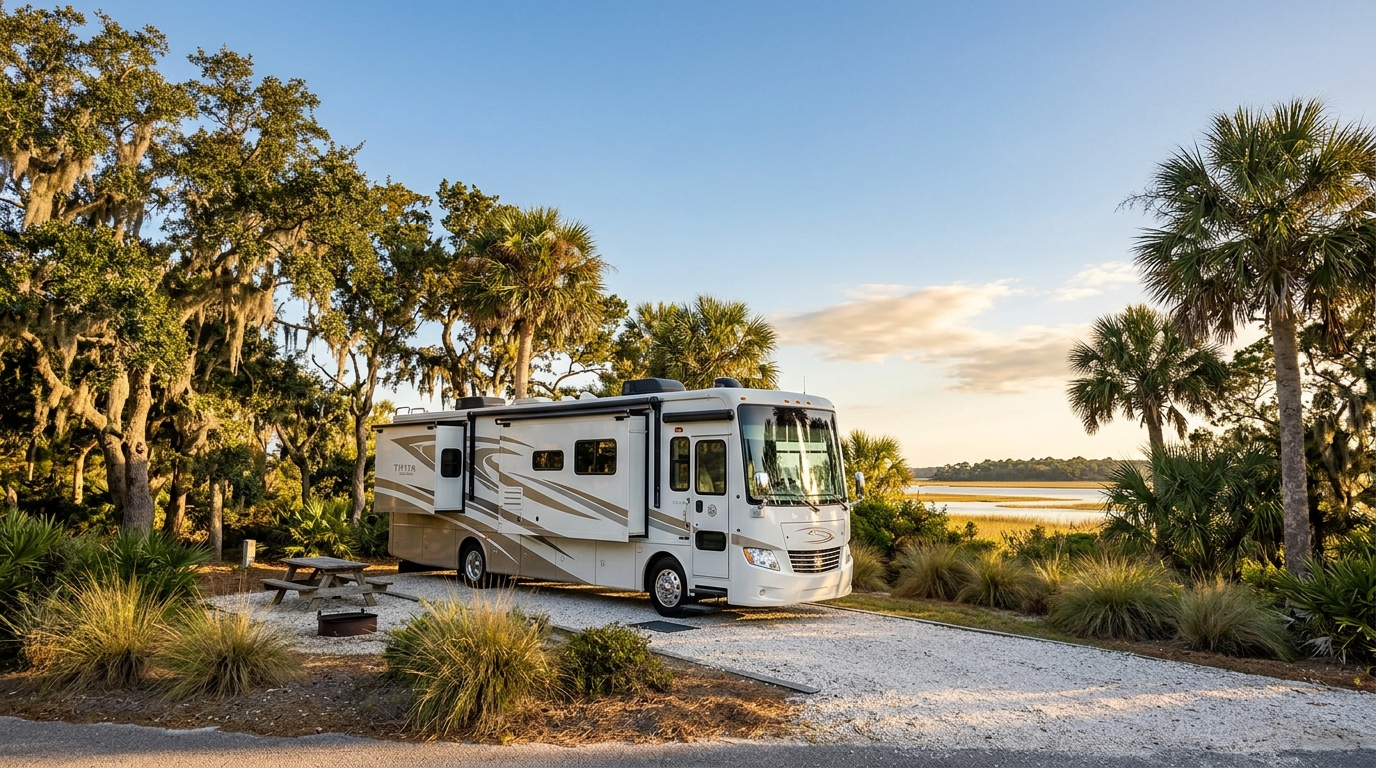
Umbrella Liability Insurance SC NC for Homeowners
Umbrella liability insurance SC NC households often add is extra liability coverage that sits above your home and auto policies. When a serious claim exceeds those primary limits, a personal umbrella can help pay remaining liability costs and related defense expenses, subject to its own terms.[1][2] It is not a replacement for homeowners insurance or auto insurance. It is a higher layer of protection for people who want more room between a large claim and their savings, home equity, and other assets.
For coastal South Carolina and North Carolina homeowners, an umbrella often makes the most practical sense when you have meaningful assets, multiple drivers or vehicles, a second home or rental, or everyday exposures such as guests, pets, pools, or frequent highway miles. Minimum state auto liability limits are not designed to match the full cost of a serious injury claim, so many families choose higher primary limits first, then add an umbrella once those underlying floors are in place.[3][5][6]
What a personal umbrella policy actually is
A personal umbrella policy provides liability coverage and defense support beyond what your primary auto, homeowners, or renters policies pay.[1] The National Association of Insurance Commissioners (NAIC) explains that an umbrella can help with liability and legal defense costs that exceed the amount your primary insurance will pay, and that umbrella policies address situations where you are held responsible for bodily injury, property damage, or personal injury.[1]
NAIC’s homeowners insurance topic page also describes personal umbrella liability as coverage that pays for losses from bodily injury, property damage, and personal injury to others beyond the limits of the underlying policy.[2] In plain language: your home or auto policy responds first up to its liability limit. If a covered claim still needs more, the umbrella can step in for the excess, up to the umbrella limit you bought.
Umbrella coverage is optional. No South Carolina or North Carolina law requires a personal umbrella the way each state requires auto liability insurance to drive legally.[5][6] The decision is about how much liability protection fits your household, not about meeting a mandate.
How umbrella coverage sits above home and auto liability
Think of your insurance stack in layers.
- Primary liability on auto and home. Your auto policy’s bodily injury and property damage liability respond when you are at fault in a crash. Your homeowners (or renters) liability responds when you are legally responsible for injury or property damage connected to your premises or household activities, subject to policy terms.[8]
- Exhaustion of those limits. When a judgment or settlement uses up the applicable primary limit, the primary policy has done its job for that layer.
- Umbrella layer. The umbrella can then respond for additional covered liability amounts, and often for defense costs associated with those claims, according to the umbrella contract.[1][3]
The Insurance Information Institute (III) notes that umbrella or excess liability policies provide coverage over and above standard home (or auto) liability limits and start to pay after you have used the liability insurance in your underlying policy. III also notes that umbrellas often offer broader coverage than standard policies, not only higher dollars.[3]
Texas Department of Insurance consumer guidance (useful as a clear national-style explanation of how umbrellas work) puts it the same way: if you are in a car accident or someone is hurt in your home and you are sued for medical bills, the umbrella may kick in after your auto or home insurance stops paying. That guidance also notes umbrella policies typically cover everyone in the household.[7]
What an umbrella does not do is rebuild your kitchen, fix your own car, or replace flood damage to your home. Those needs sit with property coverages, collision or comprehensive, and separate products such as flood insurance. Umbrella is about liability to others, not first-party property repair.
Underlying limits: the floor under the umbrella
Carriers almost always require you to carry solid liability limits on your auto and home policies before they will issue an umbrella. Those required amounts are called underlying limits.
III states that most companies will require a minimum of $300,000 of underlying liability insurance on a standard homeowners policy for umbrella coverage.[3] III also notes that most homeowners policies provide a minimum of about $100,000 of liability insurance, while higher amounts are available, and that many homeowners are increasingly advised to consider at least $300,000 to $500,000 of liability on the home policy itself.[3]
Auto underlying requirements vary by insurer. Common program designs ask for higher split limits or a combined single limit well above state minimums (for example, substantial per-person and per-accident bodily injury limits plus solid property damage liability). Exact numbers depend on the carrier and the vehicles and drivers on the policy. The practical takeaway for SC and NC families is simple: state minimum auto liability is rarely enough to qualify for, or sit comfortably under, an umbrella.
Why state minimum auto liability is only a starting point
South Carolina: The South Carolina Department of Insurance states that drivers must carry liability and uninsured motorist coverage. Minimum bodily injury liability is $25,000 per person and $50,000 per accident, with a $25,000 property damage minimum. Uninsured motorist coverage is required at those same minimum liability amounts (25/50/25).[5]
North Carolina: North Carolina’s minimum liability limits increased for policies new or renewed on or after July 1, 2025. The North Carolina Department of Insurance explains that the current required minimum is $50,000 per person and $100,000 per accident for bodily injury, and $50,000 for property damage (often written 50/100/50).[6]
Those legal floors keep you compliant. They are not a measure of what a multi-vehicle crash, a long hospital stay, or lost wages for a high-earning injured party can cost. That gap is exactly where higher primary limits and, for many households, umbrella liability insurance SC NC agents discuss become practical planning tools rather than “nice to have” add-ons.
When an umbrella makes sense for coastal homeowners and drivers
An umbrella is worth a serious look when one or more of the following is true for your household.
You have assets or income worth protecting beyond primary limits
III recommends considering an excess or umbrella policy if property, investments, and savings are worth more than the liability limits on your primary policies.[3] That can include home equity in a Myrtle Beach, Charleston, or coastal NC property, brokerage accounts, rental income streams, and other non-exempt assets. Exact protection of specific asset types can depend on state law and account type, so the insurance conversation should sit next to your broader financial picture.
You drive a lot, share the road with multiple household drivers, or insure several vehicles
Most large personal liability claims arise from everyday activity, and auto accidents are a frequent path to high-dollar injury claims. Multi-car households, teen or new drivers, long commutes on US-17 or I-26, and frequent regional travel between the Grand Strand, Charleston, and Charlotte all increase the number of miles and intersections in play. An umbrella does not make anyone a better driver. It does give the household a larger liability limit if a serious at-fault claim exceeds the auto policy.
You host guests, own a pool, keep pets, or have other premises exposures
Texas Department of Insurance examples of situations that can fall under umbrella protection include a serious multi-car crash, a dog bite, a child hurt in a yard, pool, or trampoline setting, and a fall injury in the home.[7] Coastal living often means open houses for family, seasonal guests, outdoor entertaining, and water-adjacent lifestyles. Primary homeowners liability is still the first responder. The umbrella is the second layer when those limits are not enough.
You own more than one property or rent to others
Multi-property households (primary home plus beach cottage, pied-à-terre, or long-term rental) stack both asset value and visitor exposure. Landlord situations often need the right underlying landlord or dwelling coverage first. A personal umbrella may then extend extra liability, depending on how the properties are scheduled and how the insurer underwrites rentals. Commercial activity usually needs commercial liability, not a personal umbrella alone.
You want broader personal injury liability than a basic home policy emphasizes
Umbrellas are often described as offering broader personal injury liability than a basic homeowners form. Texas DOI notes that an umbrella might cover claims such as false arrest, defamation, and slander, depending on the policy.[7] NAIC also lists personal injury among the types of harm umbrella coverage addresses.[1][2] Exact definitions and exclusions still live in the policy language.
Practical examples for multi-car and multi-property households
These examples are illustrative, not predictions of any claim outcome. Real claims depend on facts, fault, policy wording, and available limits.
Example 1: Multi-car family, at-fault highway crash. A two-car household on the Grand Strand has auto liability limits well above the South Carolina minimum, but a multi-vehicle crash produces medical expenses, lost wages, and property damage that approach or exceed the auto liability limit. Primary auto liability pays up to its limit. An umbrella, if in force and applicable, can help with remaining covered liability and defense costs above that layer.[1][7]
Example 2: Guest injury at a coastal home. Friends visiting a Charleston-area home are injured in a covered premises accident. Medical and related damages exceed the homeowners liability limit. The homeowners policy responds first. An umbrella can provide additional liability capacity once that underlying limit is exhausted.[2][3]
Example 3: Primary residence plus rental. A family keeps a year-round home inland and a small coastal rental. A tenant or visitor claim at the rental exhausts the liability limit on the dwelling or landlord policy that applies to that location. If the umbrella lists the property and the claim is a covered personal liability exposure, the umbrella may respond above the required underlying insurance. If the rental is operated as a business without proper underlying coverage, a personal umbrella may not be the right tool.
Example 4: Higher assets than primary limits. A Charlotte-area household owns a paid-down home, investment accounts, and two vehicles. Homeowners liability sits at $300,000 to meet a common umbrella underwriting floor, and auto liability sits at the higher limits the carrier requires.[3] The household then buys a $1 million umbrella so that total liability capacity better tracks net worth, rather than stopping at the primary policy ceilings.
In each case, the sequence is the same: build strong underlying auto and home liability first, confirm carrier requirements, then size the umbrella to assets, lifestyle, and risk tolerance.
Cost context (without guessing your quote)
Premiums are personal. They depend on drivers, vehicles, properties, claims history, required underlying limits, and the umbrella limit you choose. As general consumer guidance, III has long noted that umbrella policies often cost on the order of a few hundred dollars a year for an extra $1 million of liability protection (III’s renters-insurance guidance cites a common range of about $200 to $350 a year for $1 million of extra liability protection).[4] That is educational context, not a quote for any SC or NC household. We never invent carrier-specific prices here; a real review of your policies is the only way to price coverage correctly.
III also notes that the greater the underlying liability coverage you already carry, the more favorably an umbrella or excess policy may be priced, because the umbrella is farther from the first dollar of a claim.[3]
What to review before you buy
- Current liability limits on every auto and property policy in the household.
- Named insureds and household members so drivers and residents are correctly listed.
- All vehicles and properties that need to sit under the umbrella, including secondary homes and eligible rentals.
- Carrier minimum underlying requirements for auto, home, and any watercraft or other scheduled liability.
- Exclusions and definitions, especially business activity, intentional acts, and craft or recreational vehicles.
- Limit size, often sold in $1 million increments, matched to assets and future earning risk, not only today’s checking balance.[7]
Practical takeaways
- Umbrella liability insurance SC NC residents buy is excess liability, not a substitute for solid home and auto policies. Primary coverage pays first.[1][2]
- State minimum auto limits are legal floors, not claim-size forecasts. South Carolina’s 25/50/25 minimum and North Carolina’s post-July 2025 50/100/50 minimum keep you legal; higher limits and an umbrella address larger personal exposures.[5][6]
- Plan underlying limits deliberately. Many insurers look for about $300,000 of homeowners liability before issuing an umbrella, and III often points homeowners toward $300,000 to $500,000 of liability as a thoughtful primary range even before the umbrella layer.[3]
- Multi-car and multi-property households usually have more ways a claim can occur and more assets on the line. That combination is a classic fit for an umbrella conversation, not a scare story.
- Use clear examples to stress-test your stack: a serious at-fault crash, a guest injury, a dog-related claim, or a rental-related liability event. Ask whether your current limits would feel adequate if numbers climbed quickly.[7]
- Review after life changes: new teen driver, boat or pool, second home, inheritance, business use of a vehicle, or a move between SC and NC.
How we can help
At Beach Insurance LLC, we are an independent, Trusted Choice agency serving Myrtle Beach, Charleston, Charlotte, and coastal North and South Carolina. We help households line up personal insurance the practical way: start with the right home and auto liability foundations, confirm what an umbrella carrier will require underneath, then compare options that fit multi-car and multi-property realities without guesswork on premiums.
If you want a clear reading of whether umbrella liability insurance SC NC coverage belongs on your program, we will walk through your current limits, drivers, properties, and goals in plain language. Call (843) 626-9244, email info@beachinsurancellc.com, request a quote, or contact us to schedule a review. We are here to make the extra layer of protection understandable, measured, and matched to how you actually live and drive along the coast and inland.
Citations
[1] National Association of Insurance Commissioners (NAIC). “What’s an Umbrella Policy?” https://content.naic.org/article/whats-umbrella-policy (Dec. 15, 2022).
[2] National Association of Insurance Commissioners (NAIC). “Homeowners Insurance” (insurance topics; personal umbrella liability). https://content.naic.org/insurance-topics/homeowners-insurance (accessed 2026).
[3] Insurance Information Institute (Triple-I). “How much homeowners insurance do I need?” https://www.iii.org/article/how-much-homeowners-insurance-do-i-need (accessed 2026).
[4] Insurance Information Institute (Triple-I). “Renters Insurance” (umbrella cost context for $1 million of extra liability protection). https://www.iii.org/article/renters-insurance (accessed 2026).
[5] South Carolina Department of Insurance. “Automobile Insurance.” https://doi.sc.gov/588/Automobile-Insurance (accessed 2026).
[6] North Carolina Department of Insurance. “Automobile insurance: What’s covered and what isn’t” (minimum 50/100/50 liability). https://www.ncdoi.gov/blog/2026/07/22/automobile-insurance-whats-covered-and-what-isnt (July 22, 2026). See also NC DOI, “Changes to the Rating of Automobile Insurance Policies, Effective July 1, 2025,” https://www.ncdoi.gov/changes-rating-automobile-insurance-policies-effective-july-1-2025 .
[7] Texas Department of Insurance. “Umbrella policy: What is it and when do you need one?” https://www.tdi.texas.gov/tips/umbrella-policies.html (updated April 10, 2025).
[8] National Association of Insurance Commissioners (NAIC). “Homeowners Insurance” (consumer overview; personal legal responsibility for injuries and property damage). https://content.naic.org/consumer/homeowners-insurance.htm (accessed 2026).